


Few contemporary voices are exploring both the overlap and divergence of modern Methodism and Anglicanism from the perspective of Original Methodism. I have set out to remedy this. Last year, I wrote about the central influence of Methodists on the early days of the Reformed Episcopal Church, a founding jurisdiction of the Anglican Church in North America (ACNA). That was a historical account contained to the 19th century. Now, in the 21st century, you will find former Methodist laity who are confirmed Anglicans in pews, former Methodist elders who are Anglican priests, and even a few churches that disaffiliated from the United Methodist Church (UMC) and joined the ACNA. Asbury Theological Seminary, my alma mater, is an approved ACNA seminary with an Anglican Studies track, several ordained and lay ACNA faculty, and a thriving parish on the seminary campus.
Everywhere I turn I meet Anglicans with deep connections to Methodism. It is important to articulate why many faithful Methodists like me have found a home among orthodox Anglicanism, why it is appropriate, and how the original formulation of Methodism found within the Church of England in the 18th century still calls Anglicanism to faithfulness today.
I do not often write autobiographically, yet I have been encouraged by recent examples where such writing has been helpful to a larger audience. Larry Sanger’s multi-article systematic treatment of his choice to join the ACNA and Steven Wedgeworth’s account of his journey from Presbyterianism to the ACNA have been great recent examples. This piece will be less systematic than Sanger’s but more detailed than Wedgeworth’s.
Circuit Riding
I never intended to become a Methodist. I was argued into the faith from apologetics. Once I came to faith, I knew I needed to be baptized and join a local church. Being a teenager, I tried to kill two birds with one stone and went to church with a girl I pursued and later dated. It was a United Methodist congregation. Eventually, the romantic goal of my decision would fade, but, by God's grace, I stayed at church. I went because I loved God.
I was initially attracted to what seemed like a more intellectually robust tradition: Reformed Protestantism. Back then, they had a monopoly on the online sphere (TGC, Desiring God, podcasts, Keller sermons, etc.). Yet I was reading theology while sitting under the preaching of a faithful Methodist preacher and Asbury alumnus, hearing about God's grace as articulated in the English Protestant tradition of John Wesley. I eventually found agreement with the conclusions of what is commonly called ‘Wesleyan-Arminian theology’ (the nomenclature is debatable, as we’ll explore). Admittedly, at that point in my life, I was still averse to such labels, probably because I consumed so much Reformed content and labels that were too specific were shunned back then. Being a classical Protestant was sufficient for me as a layman.
Going to college relocated the geographic center and everyday rhythms of my life. I became involved in a fantastic parachurch campus ministry and a Wednesday night Bible study at a Church of Christ near campus. Attending the UM church out in the country was becoming a burdensome commute on Sundays, with the writing on the wall about the impending schism of the UM denomination even though my UM church was conservative (it has since become GMC). Determined to not fall into the college habit of forfeiting church for campus ministry, I looked for a closer church where I would be theologically comfortable.
Many of my friends attended a Free Methodist Church (FMC) congregation just a few miles from campus, so it was a natural option. I initially felt uncomfortable with the praise band and lack of hymnals, but I eventually settled in. While a simple change of geography precipitated my move to the FMC, it became a good place for me. I sat under the teaching of Godly pastors, many of whom were Asbury alums (a theme is emerging). Mentors were willing to pour into my life and help me seek God’s will—I still consider them friends to this day. It was there that my wife and I were married, and it was there I finally surrendered to God’s call into ministry.
Pursuing ordination, the FMC had me discern between their Course of Study and seminary. Evidently, I was predestined to attend Asbury Theological Seminary. But before starting, I took some Course of Study classes, which led me to study deeper independently. Free Methodist candidates, at least at that time, were not required to read any primary sources—not a single treatise, sermon, or hymn. I remember expressing my frustration at this in a book review for my Wesleyan Theology class. My instructor’s comment on my paper was, “This tells me that you are ready for a deeper dive into Wesley. Go for it.” Permission given, I set off reading the primary sources myself (many thanks to Wesley Center Online).
There, in John and Charles Wesley’s writings and the unaltered Articles of Religion, I found the theological depth the part of me that had studied the Reformed tradition wanted. I discovered the Book of Common Prayer and began to pray differently. A friend joined the ACNA and so I learned there was a conservative alternative to the Episcopal Church, sadly with no parishes in my area. Beyond the Wesleys, I also began to read the Church Fathers and the Reformers, beginning to understand there is a deep catholicity to the Church, and I had an increasing desire to conform to it. Fundamentally, I was wrestling with what sort of minister God was calling me to be, and He used the history of Methodism to guide me.
Who are the Original Methodists?
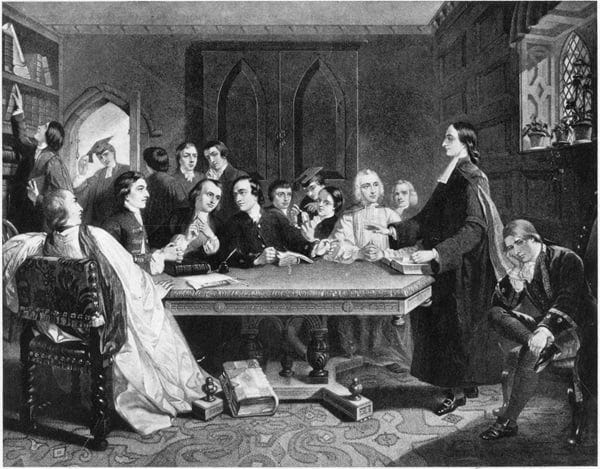
Studying John Wesley reveals more complexity than vague commitments called ‘Wesleyan-Arminianism.’ Neither was he the only figure in Methodism. His brother Charles, George Whitefield, John Fletcher, William Grimshaw, and other clergymen played central roles. They lived and died as priests of the Church of England. I had been erroneously taught that John Wesley left the Church of England, a misconception repeated too often.
These were Oxford men who early in their ministries found common cause as they sought to live holy lives with accountability. They were derided for their piety, mocked as ‘Bible Moths’ and ‘Bible Bigots’ for their devotion to the Scriptures, ‘Sacramentarians’ because of their frequent services of the Lord’s Supper, and famously ‘Methodists’ for their rigid rule of life. Using the nickname originally meant as ridicule, John Wesley organized the Methodists as a religious society within the Church of England, and these men played a central role in the First Great Awakening in Britain and America.
Salvation and Societies
Article X (Anglican) & VIII (Methodist), “On Free Will”
The condition of Man after the fall of Adam is such, that he cannot turn and prepare himself, by his own natural strength and good works, to faith; and calling upon God. Wherefore we have no power to do good works pleasant and acceptable to God, without the grace of God by Christ preventing us, that we may have a good will, and working with us, when we have that good will.
Most Methodist laity and even pastors I knew believed Methodism was just whatever Calvinism was not. This is the common caricature on the street, too. For confirmation, look no further than the following scene from the 90s animated classic King of the Hill.
Unfortunately, many evangelical Methodists in the South confessed something like “Once Saved, Always Saved.” This doctrine is borrowed from what I like to call Bapticostalism, the prevailing expression of Christianity in America today.
The Original Methodists were mostly Arminian, meaning the role of God’s prevenient grace, to which fallen man may respond by God’s grace, is held with confidence while unapologetically upholding total depravity.1 A strong faction of Calvinist Methodists existed, led by George Whitefield. Whether Arminian or Calvinist, they were broadly Reformed (a “hair’s breadth” from Calvin, as John Wesley described himself) and emphasized the need for the New Birth and sanctification in the Christian life. This came from a recognition of the stagnant Christian faith that had taken hold of their nation. Nearly everyone was a baptized Anglican or nonconformist, yet people wallowed in sin openly. They did not attend to the sacraments and ordinances of the Church. They flagrantly violated the moral law. The poor were ignored. Vices were becoming accepted norms. The Methodists knew this was not how a nation of regenerate Christians should live. They preached fiercely, in pulpits and the open air, the need to be born again to a right relationship with God in Christ by the power of the Holy Spirit—an experience many of them had personally known.
The Wesleys went one step further than fiery preaching about repentance. They organized the Methodist societies: an integrated discipleship structure to aid man to persist in holy living. A key feature of their societies was participation in local Anglican parish life. These societies did not usurp the parish system. It existed alongside the established church and sanctified it. Their emphasis on the holy life and sanctification was not novel, either. A direct line can be traced from the teaching of perfect love found in the apostolic fathers, to St. Augustine’s teaching on holiness, through Cranmer’s affective theology, to the Puritans, and finally to Anglicans just a generation or two preceding, like Jeremy Taylor and William Law. The Methodists proclaimed the spiritual inheritance of the English Church to the nation in the highways and byways.
Sacraments
Article XXV (Anglican) & XVI (Methodist), “Of The Sacraments”
Sacraments ordained of Christ are not only badges or tokens of Christian men’s profession, but rather they are certain signs of grace, and God’s good will toward us, by which he doth work invisibly in us, and doth not only quicken, but also strengthen and confirm, our faith in him.
Most modern Methodist churches still recognize the two Sacraments of the Gospel, Holy Baptism and the Lord’s Supper. However, there is a widening gulf between the traditional understanding of the sacraments and modern sensibilities. Bapticostalism’s reductionist theology has made a damaging impact on all Christian traditions to devastating effect, redefining our Lord’s sacraments as mere memorials empty of being true means of grace.
Additionally, the “five commonly called sacraments”—confirmation, penance, holy orders, matrimony, and anointing of the sick—have been all but lost in Methodism, though present in the Methodist Articles of Religion.
The Lord’s Supper
Article XXVIII (Anglican) & XVIII (Methodist), “Of The Lord’s Supper”
The Supper of the Lord is not only a sign of the love that Christians ought to have among themselves one to another, but rather it is a Sacrament of our Redemption by Christ’s death: insomuch that to such as rightly, worthily, and with faith, receive the same, the Bread which we break is a partaking of the Body of Christ; and likewise the Cup of Blessing is a partaking of the Blood of Christ.
Reading John’s sermon “The Duty of Constant Communion” for the first time was a shocking experience. I was confronted with a view of the Lord’s Supper that was foreign to my experience in both Methodist churches I had been a part of. At the UM church, it was a solemn but awkward act taken only on the First Sunday of the month. At the FM church, it was biweekly but had no liturgy, confession, or any sacramental value attached to partaking. It was more an act of congregational unity than a sacrament. At both, the Table was open regardless of true penitence or baptismal status. Elements were sacrilegiously handled and discarded. It was the memorialism of Bapticostalism.
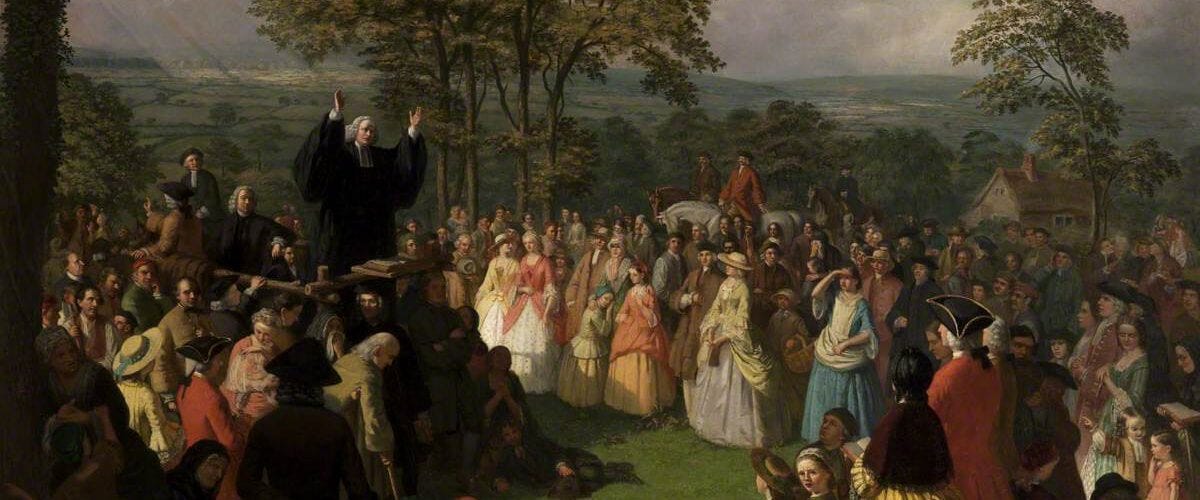
The Original Methodists placed the Lord’s Supper at the very center of Christian life. At Oxford, the Holy Club celebrated multiple times a week. George Whitefield often communed hundreds in his revivals. John Wesley outlined a High Church sacramental theology in his sermon “The Duty of Constant Communion,” and prescribed that Methodists read Book IV of Thomas à Kempis’ Imitation of Christ in preparation. Charles Wesley wrote his incredible Hymns on the Lord’s Supper, reflecting an equally high sacramental theology.
Original Methodists believed in the real presence of Christ in the sacrament, confessing it is where God has promised Christians to receive grace, especially assurance of salvation, pardon for sins, strengthening of the soul, healing, protection against temptation, and growth in Christian maturity. True, God may provide these benefits elsewhere, but the Original Methodists were expectant and insistent: this was “the grand channel whereby the grace of his Spirit was conveyed to the souls of all the children of God.”2 This doctrine of the Lord’s Supper is not unique; it is largely that of Calvin, Cranmer, John Jewel, and Richard Hooker. Even Wesley’s sermon “The Duty of Constant Communion” is not a completely original sermon, borrowing heavily from two Anglicans that preceded him, Robert Nelson and Arthur Bury.3
Within Methodist societies, communing at least weekly was the norm, and members were required to commune whenever it was offered. Much to the chagrin of parish norms in 18th-century England, Methodists traveled outside their parish to find churches celebrating the Lord’s Supper if theirs were negligent. John Wesley boldly claimed that Christ’s instructions to “do this” were not mere suggestions but a binding commandment, no less a command than any of the Ten Commandments.
“The case is this: God offers you one of the greatest mercies on this side heaven, and commands you to accept it. Why do not you accept this mercy, in obedience to His command?”4
In the Original Methodist way, to not offer Holy Communion at least weekly is an affront that gatekeeps God’s provided means of grace from God’s people, repeating the error of clericalism in the Roman Church. Hear Martin Luther clearly:
“The sacrament does not belong to the priests, but to all men. The priests are not lords, but servants in duty bound to administer both kinds to those who desire them, as often as they desire them. If they wrest this right from the laity and deny it to them by force, they are tyrants…” - Martin Luther, The Babylonian Captivity of the Church
Constant communion is not novel; it is the trajectory of the English Reformation taken to its prescribed conclusion. Regular partaking of Holy Communion in both kinds was restored to the laity in the English Reformation, just as Luther and the continental Reformers did. French reformer John Calvin attempted to enforce weekly Communion in his congregations. Cranmer’s first prayer book of 1549 instructed Holy Communion to be celebrated every Lord’s Day, a desire that would take time to become normative in Anglicanism. By Wesley’s era, cathedrals and college chapels were offering weekly or daily Communion. He instructed administration every Sunday for Methodist societies in America. After him, the Oxford Movement would take up the torch, leading to Holy Communion being the principal service of most Anglicans today. The desire of the Reformers, advanced by the Original Methodists and the Oxford Movement, has largely been fulfilled in Anglicanism—praise God! Sadly, modern Methodism has not followed suit.
Baptism
Article XXVII (Anglican) & XVII (Methodist), “Of Baptism”
Baptism is not only a sign of profession and mark of difference whereby Christians are distinguished from others that are not baptized; but it is also a sign of regeneration or the new birth… The Baptism of young children is to be retained in the Church.
A key element of the FM Course of Study was to study and agree to the denomination’s “dual-practice Baptism.” This approach, common among Wesleyan-Holiness denominations, permits ministers and congregations to hold either paedobaptist or credobaptist convictions. Ideally, a credobaptist minister should recognize the validity of infant Baptisms performed by others and arrange for an alternative minister if conscience prevents him from conducting one. At my local church, this meant we were exclusively credobaptist, and “re-baptisms” were common.
The root of the issue is that modern Methodist theology has largely lost the historic affirmation of Baptism as a sign of regeneration, as stated in the Articles and affirmed by John Wesley. Wesley states clearly, “all who are baptized in their infancy are at the same time born again.”5 Steve Bruns helpfully summarizes, “He had absolutely no problem stating that infants experienced regeneration because his Anglican heritage affirmed it, and he found confirmation of it in his readings from the early church.”6 Anglican systematician E. Harold Browne validates Wesley’s read of history: “The Fathers believed all [baptized] infants to be regenerate; so did the schoolmen; so did the whole mediæval Church; so did Luther and the Lutherans.”7
As with the Lord’s Supper, the Original Methodist doctrine of infant Baptism is not novel; it is the received teaching. In Cranmer’s 1548 catechism, he uses language directly from St. Augustine and Luther, teaching the Anglican doctrine is not the Romish doctrine of ex opere operato but is the Reformed doctrine:
“Verily, the water worketh not these things, but the Word of God which is joined to the water, and faith which doth believe the Word of God. For without the Word of God, water is water and not Baptism, but when the Word of the Living God is joined to the water, then it is Baptism, and water of wonderful wholesomeness, and the bath of regeneration and renewing of the Holy Ghost, whom He poured upon us plenteously by Jesus Christ, our Saviour, that we, being made righteous by His grace, may be heirs of everlasting life.”8
Instead of affirming regeneration, modern Methodist denominations officially hold the grace given in infant Baptism is prevenient grace—the same grace given to all.9 This effectively erases any meaningful distinction between covenant children of believers and the children of unbelievers. Infant Baptism becomes little more than “getting wet” and does not signify any notable benefits not already possessed.
Logically proceeding, this “atoning” prevenient grace eventually fades as a child matures, at which point regeneration becomes necessary to continue to be covered by the atonement, something previously unnecessary. The stain of original sin is thus only able to be removed by regeneration when someone is a born-again adult, and the Reformation understanding of original sin is shattered. Essentially, this is a confused attempt to apply Wesley’s theology of the New Birth pertaining to adults to infants.10 As Bruns concludes, “By removing regeneration from infant Baptism, the modern [Methodist] traditions have embraced more of an almost Anabaptist theology regarding Baptism.”11 This is a significant departure from the teaching of the Church.
Consider how the FMC articulates their theology:
“In the Free Methodist Church, both divine grace and personal decision are considered integral to the Christian life. The practice of two seemingly contradictory rituals in the church is a witness to this reality. While infant baptism highlights divine grace, infant dedication emphasizes personal decision.”12
I appreciate the honesty in admitting a contradiction, but it does not inspire confidence. Divine grace should win every time. This position is simply not biblically or theologically coherent and is completely foreign to Original Methodism. It is not merely a rejection of baptismal regeneration, either, but a fundamental rejection of Baptism as a means of grace in tying it to prevenient grace. There is nothing for the sign to signify that is not common to all. There is no identifiable benefit, and all that remains is a personal decision, a “good work” (rather, sacraments are God’s work). I’ve heard infant dedications cryptically called “dry baptisms,” which is a revealing admission the sign has been completely divorced from the thing signified, destroying the nature of the sacrament in their theology.
“Why should any of us be such enemies to those, whom we pretend to love unfeignedly, and [be] so negligent of their safety, as not speedily to deliver them from the guilt and danger of original sin, rescue them from the power of [Satan], and place them under the guardianship of God and good angels?” - Thomas Stackhouse, A Complete Body of Speculative and Practical Divinity
I am thankful the FMC required candidates to wrestle with this doctrine. Reading the tradition on Baptism (and learning Wesley held a more scriptural ordo salutis13) I concluded this was not something I could affirm in good conscience, nor could I walk side-by-side with Methodist pastors who are credobaptists, failing to do what the unaltered Articles of Religion ought to bind their conscience to: retain the practice and be participants in ministering God’s grace.
Liturgy
Article XXXIV (Anglican) & XXII (Methodist), “Of the Traditions of the Church”
Whosoever, through his private judgment, willingly and purposely doth openly break the rites and ceremonies of the church to which he belongs, which are not repugnant to the Word of God, and are ordained and approved by common authority, ought to be rebuked openly, that others may fear to do the like, as one that offendeth against the common order of the church, and woundeth the consciences of weak brethren.
Among the primary sources, I discovered the Sunday Service for Methodists, a mild edit of the BCP. In the preface to Sunday Service, Wesley says, “I believe there is no liturgy in the world, either in ancient or modern language, which breathes more of a solid, scriptural, rational piety, than the Common Prayer of the Church of England.” The Methodists were intended to be a liturgical, prayer book-using people. Abandoning this, Sunday Service fell out of use quickly; by 1792 according to Don E. Saliers.14
Exploring the BCP, I learned to pray the Daily Offices over time, and the beauty of Anglican liturgy got in my bones. I simultaneously pored over the Discipline, the Articles of Religion, and various doctrinal statements of the many Methodist and Wesleyan churches. I found rich liturgies in the old Methodist hymnals that I had never heard before that find their genesis in Sunday Service—straight from the BCP. It has been rightly said the best summary of John Wesley’s theology can be found in the Collect for Purity, said as a preface to every service of BCP Holy Communion:
Almighty God, unto whom all hearts are open, all desires known, and from whom no secrets are hid: Cleanse the thoughts of our hearts by the inspiration of thy Holy Spirit, that we may perfectly love thee, and worthily magnify thy holy Name; through Christ our Lord. Amen.
I was floored by the Collect for Purity. Hearing it, Wesleyan theology finally coherently ‘clicked.’ What we say matters. What we do not say matters. I realized the profound disconnect between what Original Methodists historically believed and what most modern Methodists practice is rooted in a loss of the historic English Protestant liturgy.
I was convinced by the confessions. I fell in love with the language of forgotten and discarded liturgies. What do you do when you are convinced by the confessions your church inherited, but she does not hold fast to them? And when you love her liturgies, but she does not say them?
It became clearer my theological convictions were becoming those of the Original Methodist movement within the Church of England. I came to the parallel conclusion that it unfortunately bears little resemblance to any Methodist or Wesleyan denomination in modern America, which warrants a word on ecclesiology.
Methodists and Ecclesiology
Article XIX (Anglican) & XVII (Methodist), “Of the Church”
The visible church of Christ is a congregation of faithful men in which the pure Word of God is preached, and the Sacraments duly administered according to Christ’s ordinance, in all those things that of necessity are requisite to the same.
Discovering the rich heritage of the Catholic faith in England is to encounter an ancient tradition. Pious legend claims St. Joseph of Arimathea was a missionary in the apostolic age, while others credit the early spread to Roman soldiers. Whatever the spark, Christianity spread early in Britain. St. Alban was Britain’s first martyr in 305. The patristics mention British bishops, presbyters, and deacons (note the threefold order) were attending church councils in the early 300s.
Later, the Anglo-Saxons were converted en masse under the famed ministry of St. Augustine of Canterbury. He coalesced with the existing churches, leading to a unified Christian presence on the island that would see the majority of it converted to the Christian faith. It was this inheritance that the English Reformers and Divines like Cranmer, Latimer, Ridley, Jewel, Hooker, Davenant, and Nowell took up and re-formed during the English Reformation and after. Their task was removing the aspects of the Romish traditions that were a shroud concealing truths of the biblical and apostolic faith first brought to Britain. As judicious consumers of the writings of the Church Fathers, they were ad fontes men. They saw themselves not as innovators but as inheritors, entrusted with a rich deposit of faith to recover and safeguard.
“I believe in God the Father Almighty, maker of heaven and earth, and every article of the Catholic faith, every word and sentence taught by our Saviour Christ, his Apostles and Prophets, in the Old and New Testament.”
- St. Thomas Cranmer, as quoted at his martyrdom
John Wesley, a fierce advocate for what he called “primitive Christianity,” was following in their footsteps. Unfortunately, many in academia and churches take him in isolation, not as an heir and son of the rich English Christian tradition. This lack of peripheral vision leads to significant amounts of misunderstanding.
My journey has been an exploration of this history. Like a man charting a place that is new to him, I found a stream (Methodism). Later, I was able to find clear water in the stream where it had been muddied (Original Methodism). One is not satisfied with a stream, however clear it is. One needs deeper wells, a firm foundation, so I followed the stream back to its source. Ad fontes. J.I. Packer beautifully articulated what I am talking about, saying:
“There is a mainstream flowing all the time, and the mainstream has life and energy and self-sustaining power from one generation to another. Once you see it, you wonder how you could ever miss it.”15
I am thankful to have found a firm foundation because there is a glaring issue within the Original Methodists that truly divided them: John Wesley’s late ecclesiology.
Apostolicity
Apostolic succession has generally required two aspects in the High Church tradition. First, the demonstrated faith and doctrine of the apostles are required. It is always of the very being of the church (esse). Secondly, a historic connection to the apostles, manifest visibly through the laying on of hands by those already in the succession. For most High Churchmen, this aspect constitutes part of the well-being (bene esse) or fullness of being (plene esse) of the Church, not its very being (esse). Therefore, churches may be genuine churches without the second, but not without the first. Still, the second aspect is a gift and grace of God, not one to be discarded by choice.
The Methodists, a society within the Church of England, did not possess an independent sacramental life. Methodist lay preachers exhorted and led class meetings but did not administer the sacraments—they were received from clergy in historic succession. Thus, Original Methodism embodied a High Church ecclesiology: evangelical zeal and holy living within the Church’s rightly ordered means of grace.
John Wesley was the hinge long upholding a robust High Church ecclesiology. He insisted on it. Westley Hall, a former pupil of John and an Anglican priest, took his Methodist society and departed the Church of England, urging John and Charles to follow his lead. John was furious. In response, he appealed to High Church ecclesiology, saying, “We believe it would not be right for us to administer either Baptism or the Lord's Supper unless we had a commission so to do from those bishops whom we apprehend to be in a succession from the Apostles.”16
Even after John Wesley came to believe that bishops and presbyters were of the same order (but not degree) late in his ministry, he refused to act in defiance of the Church rightly ordered. In 1756, he wrote that he still regarded “the Episcopal form of Church government to be both scriptural and apostolical.”17 He consistently refused repeated pleas of his preachers to ordain them.18 His stand was contentious; some Methodists broke from Wesley’s societies and began unlawfully administering the sacraments.
In 1784 Wesley believed the newly independent United States constituted an emergency. He took the decisive step of laying hands on fellow priest Thomas Coke to set him apart as ‘superintendent’ with instructions to ordain others. He effectively declared himself a bishop, exercising the higher degree of episcopacy. In doing so, Wesley usurped the very authority he had previously refused to claim that the Church of England, and the rightly ordered church throughout Christian history, reserves for her bishops. He convinced himself that the emergency justified the act, writing that he was “as real a Christian bishop as the Archbishop of Canterbury.”19 Charles believed Coke manipulated the elderly John into the act. True or not, his brother was viciously opposed, writing in a critical poem:
So easily are Bishops made
By man’s, or woman’s whim?
W[esley] his hands on C[oke] hath laid,
But who laid hands on him?
[…]
It matters not, if Both are One,
Or different in degree,
For lo! ye see contain’d in John
The whole Presbytery!20
Methodist societies drew their sacramental life from the apostolic succession, right ordering, and doctrinal inheritance of the Church of England. When John stepped outside that succession to provide for America, he departed from the principle he had defended and set the Methodists on a trajectory of slowly departing from the fullness of their inheritance. The loss of one pillar begets the slippery slope of losing the other.
Article XXIII (Anglican), “Of Ministering in the Congregation”
It is not lawful for any man to take upon him the office of public preaching, or ministering the Sacraments in the Congregation, before he be lawfully called, and sent to execute the same. And those we ought to judge lawfully called and sent, which be chosen and called to this work by men who have public authority given unto them in the Congregation, to call and send Ministers into the Lord’s vineyard.
His actions also betray what is fitting and lawful, according to Article XXIII. In all proper models of church governance, no one ordains from his own presupposed authority like John Wesley did. In every proper model—episcopal, congregational, or presbyterian—authority is granted within the Church, not assumed by an individual. As Charles’ poem points out (“contain’d in John, The whole Presbytery”), John assumed his own authority, failing to uphold the apostolicity of the Church. Despite his insistence of an emergency, Samuel Seabury would receive consecration for America a mere two months after Coke’s pseudo-consecration. John had unsuccessfully appealed to the Bishop of London four years prior to ordain a Methodist preacher for America but admitted at Coke’s consecration he made no further attempts to secure episcopal approval.21 Yet Charles supported Seabury, and he was quick to ordain several Methodists in America recommended by Charles.
Methodism is at its best when the ‘method’ is being lived out, which necessitates the foundations the Original Methodists presupposed: the historic liturgy, sacraments, doctrine, pastoral nurture, and the apostolic succession of the Anglican Way. A failure to properly inherit these foundations works against the very method of Methodism. Joseph Pilmore, a Methodist ordained by Seabury, prophetically spoke of this erosion in a letter to Charles, saying, “Had the Methodists kept in the bosom of the Church, there would have been but little to fear. But the schism they have made has greatly weakened the cause, and laid a foundation for endless disputes for years to come.”22
Some Methodists sense this lack. In Free Methodist ordinations I witnessed, the bishop presented the newly ordained Elder with a Bible and a succession chart tracing back to Wesley. Though not dogmatic about apostolic succession, the two gifts implicitly affirm visible connection to the apostolic faith matters (Jude 1:3). Yet looking only to Wesley is insufficient. Like the Reformers and Wesley himself, we must go further for validity: Ad fontes, back to the apostles.23
The Implicit Ascendance of Feminism within Methodism
A further indictment of modern Methodist ecclesiology, even in conservative expressions, is that it has also departed from the apostolic order as it has conceded to feminism. This is most clearly evident in the inability of Methodism today to even tolerate discussions about women’s ordination. It is, to modern Methodists, a question of mere ability (notice how the same criteria of ability led to John assuming authority he did not possess).
John Wesley was no feminist, despite some scholars’ attempts to reinvent him as such. In the course of his illicit ordinations, he never ordained a woman, and nothing indicates he even believed it conceivable.24 His use of female lay leaders is more akin to a deaconess than a priest.25 He taught witnessing to the Gospel was a duty of all Christians, male and female, not an ability conferred by ordination (1 Peter 3:5).
Arguments for women’s ordination should be made with Scripture and tradition, not on egalitarian assumptions that reduce holy orders to mere function and overlook the Church’s historic understanding of sexual difference and sacramental theology. For a further discussion of this, see Ryan Danker’s article in Firebrand Magazine.
Concluding Thoughts on Ecclesiology
The clearest definition of Methodism is found in one of Wesley’s most forgotten sermons, preached at the laying of a chapel’s foundation in 1777. His short answer: Methodism is a society of primitive Christians within Anglicanism.
His longer answer was fourfold: “Methodism, so called, is [1] the old religion, [2] the religion of the Bible, [3] the religion of the primitive Church, [4] the religion of the Church of England.” He explicitly cites Clement of Rome, Ignatius, Polycarp, Tertullian, Origen, Clement of Alexandria, Cyprian, Chrysostom, Basil, Ephrem the Syrian, and Macarius of Egypt as examples of the primitive church. As for the Church of England, he says Methodism’s inheritance is “the uniform tenor of her Liturgy, and from numberless passages in her Homilies. The scriptural, primitive religion of love… is to be found in her Morning and Evening Service, and in her daily, as well as occasional, Prayers; and the whole of it is beautifully summed up in that one comprehensive petition,” the Collect for Purity.26 This sermon reveals how deeply Original Methodism presupposes the Anglican Way. In the words of Wesley, Original Methodism is both more Anglican than either Anglicanism or Methodism is today and more apostolic than both are today, too.
I’m convinced returning to Original Methodism within contemporary Methodism is largely untenable. It is not merely about good liturgy; the larger ecclesiastical inheritance is pastorally indispensable. Packer says it well, “Anglicanism is pastorally oriented, and the Prayer Book guarantees that.”27 Methodism must be so oriented to that inheritance by the BCP, Homilies, sacraments, succession, etc. Too much is lost.
If Wesley’s own vision in that 1777 sermon were heeded, many of these losses might have been avoided. Perhaps even Wesley’s error in assuming authority for himself could be overcome if his other teachings were obeyed. Given how deeply Original Methodism was enmeshed in Anglicanism, perhaps we would still be one or on the road to reunion. Lacking this, Methodists no longer possess a robust appeal to apostolic continuity or a classical Protestant inheritance.
Other Traditions Briefly Considered
Article XIX (Anglican), “Of the Church”
As the Church of Jerusalem, Alexandria, and Antioch, have erred, so also the Church of Rome hath erred, not only in their living and manner of Ceremonies, but also in matters of Faith.
Anglicanism is not the only option for those led to Christianity in a confessional, liturgical, and traditional form. Briefly, I will say why the other major traditions, which are attractive to some today, did not entice me. This will not be exhaustive.
Roman Catholicism
Rome has much to offer someone looking for a robust magisterium and the allure of tradition. Bishop Robert Barron has even been an influential figure for me over the years. Yet, the claims of Rome related to the sacraments, justification, purgatory, papal authority, certain Marian dogmas, and the post-Newman development of doctrine require accepting doctrine that is a departure from the Scriptural inheritance of the apostles at worst or adiaphora at best as true dogmas.
Particularly regarding the ‘allure of tradition,’ as I’ve dived into the writing of the church fathers extensively, I have found little that gives Rome credence over the claims of other magisterial traditions. Rome’s use of Newman’s development of doctrine, particularly, is a concern. It is Scripture, containing the Word of God, that binds the conscience yesterday, today, and forever. Subjective development cannot hold a candle to the Word. As Larry Sanger put it in the apology that partly inspired this work, “While I respect and love Catholics as my Christian brothers and sisters, I disagree with them on many other points, and sola scriptura is the fundamental one that ultimately explains the rest.”28 Amen.
Rome also bears the same cultural and modernist pressures as the rest of the Church, with figures such as Fr. James Martin in good standing and ‘Pride Masses’ being held. What is the point of Newman’s development of doctrine, creating more authorities, if you are developing in many directions simultaneously, some of them clearly unfaithful to the Gospel? Rome does not offer a safe harbor from these issues.
Eastern Orthodoxy
Eastern Orthodoxy is also a beautiful and rich tradition. They place a high value on the writings of the early Church and have a strong desire for liturgical continuity. One of my main sources for reading the works of the Church fathers is St. Vladimir’s Seminary Press’ ‘Popular Patristics’ series!
Yet I have discovered little in Eastern Orthodoxy that Anglicanism does not already possess. Notably, Orthodoxy did not undergo the Reformation, which I view as a significant loss rather than a gain. The Reformation, for all the disunity and dysfunction that followed, offers extensive clarity and renewed grounding in the fundamental authority of the Christian faith and the plain promise of salvation—found perspicuously in the Scriptures. This is especially important as the East, like Rome, claims the title of The One True Church of Christ. If true, anyone outside her communion is outside the faith.
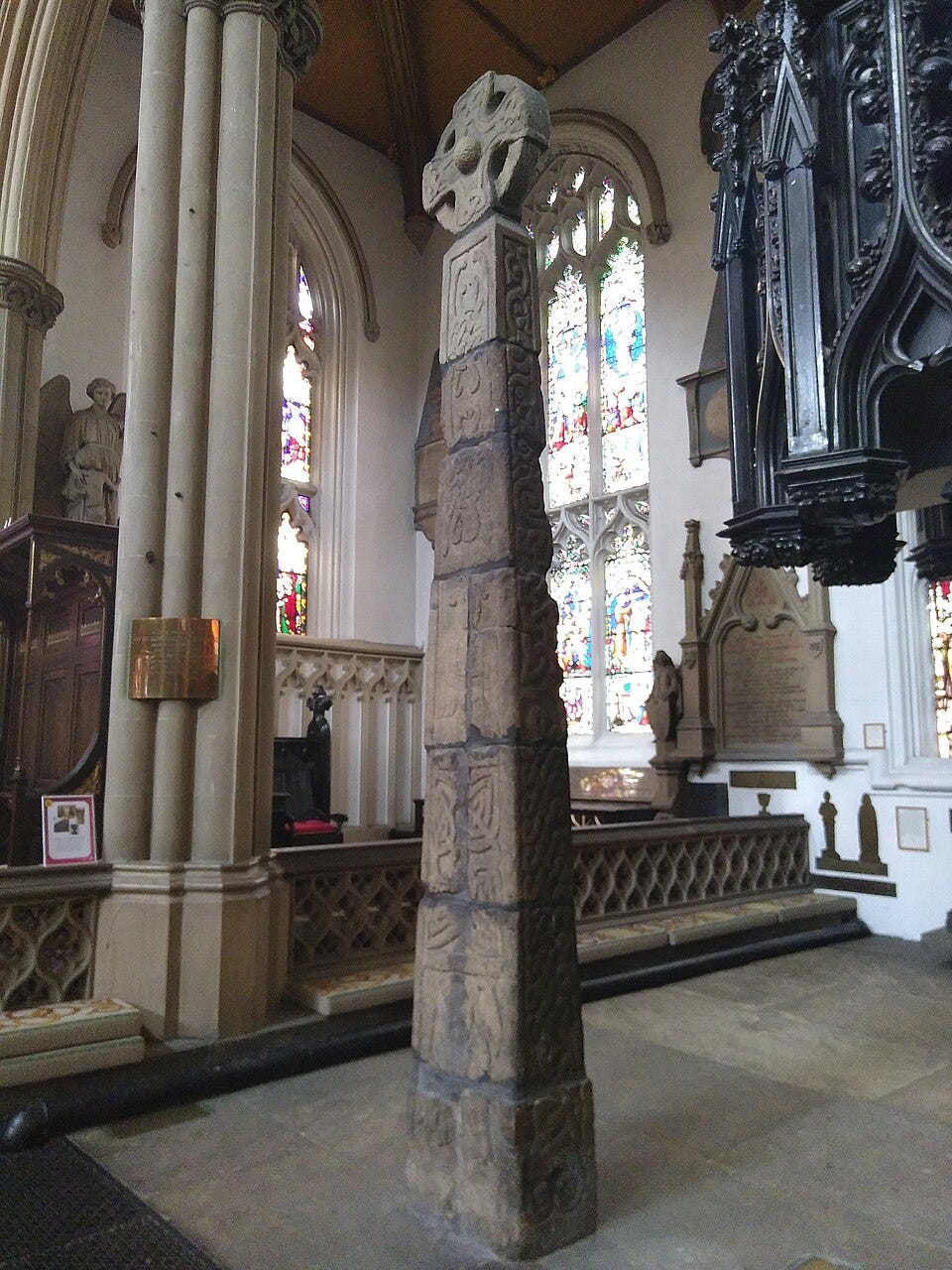
Related to this is that Anglicanism is, historically speaking, the Church of and in England and her colonies. Like many of the Eastern churches, she has her own apostolic history, language, liturgy, saints, patriarchs, iconography, etc., and she spread organically as her adherents spread. This is the faith of my direct ancestors, who faithfully baptized their children for hundreds of years in Leeds, Arley, and elsewhere; on one side, they carried their Protestant faith briefly to Dublin; and finally, they brought it to America in Annapolis in the late 17th century before settling in the deep South, becoming Methodists and Baptists (Anglican dissenters and nonconformists). There’s a generational claim the ancient English expression of the Church has on me that the East doesn’t have. My ancestors, praying the same prayers I now pray in the BCP, prayed for me!
Lutheranism
Lutherans take doctrine seriously, and I admire the confessional assent they require. At the same time, the strictness of their confessions allows little room for some of the nuance that is necessary in matters of tertiary importance and adiaphora.
A humorous display of this is seen in the 80s sitcom Cheers. Woody Harrelson’s character, Woody, and Kelly Gaines’ character, Kelly (simpler times), get married. Both are Lutherans. Kelly, however, is a member of the liberal and non-confessional ELCA, and Woody is LCMS, a conservative and confessional Lutheran church.
My inability to consider the Lutheran tradition boils down to their confessions. I cannot in good conscience subscribe to all of them as a layman, much less a minister. One of Anglicanism’s great strengths is the unity fostered by our confessions like the Thirty-Nine Articles and the Jerusalem Declaration. Men as close but with real differences, such as most of the Reformers, likely could’ve existed together in one church with Anglican confessions (Whitefield and Wesley did!), but would not have if they had to subscribe to the Book of Concord, for example. Even if I could subscribe, American Lutheranism has unfortunately rejected the historic episcopate in a remarkably similar manner to how most conservative Methodists now do. Additionally, a similar point to the one about Orthodoxy made above can be made about Lutheranism as a primarily Germanic faith.
Conclusion
Where the rubber meets the road, part of becoming Anglican was because of my pursuit of Original Methodism. God placed me in Methodist churches when I came to faith, and I followed that tradition to its natural ends. Praise God for giving me such a rich inheritance to be a part of!
The great Methodist systematic theologian William Burt Pope argued Methodism was never intended to be anything other than Reformed Catholic Anglicanism, holding to the Thirty-Nine Articles of Religion and three Creeds. He says:
“Methodist theology, which has spread during the last century over a very wide area of Christendom, is Catholic in the best sense, holding the [Thirty-Nine] Doctrinal Articles of the English Church, including the Three Creeds, and therefore maintaining the general doctrine of the Reformation.”29

This assumes Original Methodism, being inheritors of the apostolic deposit and Reformational faith found in the Church of England. W.B. Pope is merely echoing Wesley, who said of Methodists, “The doctrines we preach are the doctrines of the Church of England; indeed, the fundamental doctrines of the Church, clearly laid down, both in her Prayers, Articles, and Homilies.”30
What Original Methodism set out to be cannot be clearer: the Catholic religion found in England, deposited by the apostles and their successors, built on a foundation of generations of faithfulness to Christ through a life of Common Prayer, confessed in the three Creeds, guarded in the Articles of Religion, preached through the Homilies, and lived out in a faithful soul alive to the Holy Spirit.
Original Methodism Today
I want to reiterate how deeply indebted I am to the UMC and FMC and that my theological reflections are not a criticism of the faithfulness of anyone belonging to a Methodist or Wesleyan denomination. In the churches I belonged to, I was richly blessed by godly pastors. Following in the footsteps of these men, I graduated from Asbury Theological Seminary, to which I am ever grateful for my theological formation, which allowed me to take my theological journey seriously.
When it became clear my place was not in a Methodist denomination, I thankfully found a home in the Anglican Church. It is more authentic for me to be an Original Methodist in Anglicanism than in what constitutes Methodism today, for to be an Original Methodist is to be classically Anglican.
I was also confronted sharply with Jesus’ prayer for unity in John 17. In the FM Course of Study, we were required to read Calvin vs. Wesley: Bringing Belief in Line with Practice by Don Thorsen. He argues that Calvinists and Arminians remarkably do the practical work of ministry similarly despite differences in soteriology. Zooming out from Thorsen’s thesis, that is largely true in the mainstream of Christendom. The Gospel fosters unity. I realized I did not want to be divided from my more Reformed or Catholic-minded brothers and became deeply convicted about how unnecessary many divisions are in the Methodist world (recall Joseph Pilmore’s words). In a small way, returning to Anglicanism was doing my part in healing a schism that long preceded me.
“The glory which thou hast given me I have given to them, that they may be one even as we are one, I in them and thou in me, that they may become perfectly one, so that the world may know that thou hast sent me and hast loved them even as thou hast loved me.” - John 17:22-23 (RSV)
In my journey, the Free Methodist Church, as dear as it became to me, could not be an Original Methodist home. I know my calculus is different from others, like a layman’s would be. As an ordained minister, I have to affirm, subscribe to, and teach the doctrine and discipline of the particular church I belong to in good conscience. I can do that in the ACNA, but not in the FMC or another Methodist body. Others may faithfully arrive at a different conclusion than me with different variables. For example, I know good folks trying to make strides toward traditionalism within the new Global Methodist Church, whose formation came after my own journey. I genuinely hope they succeed.
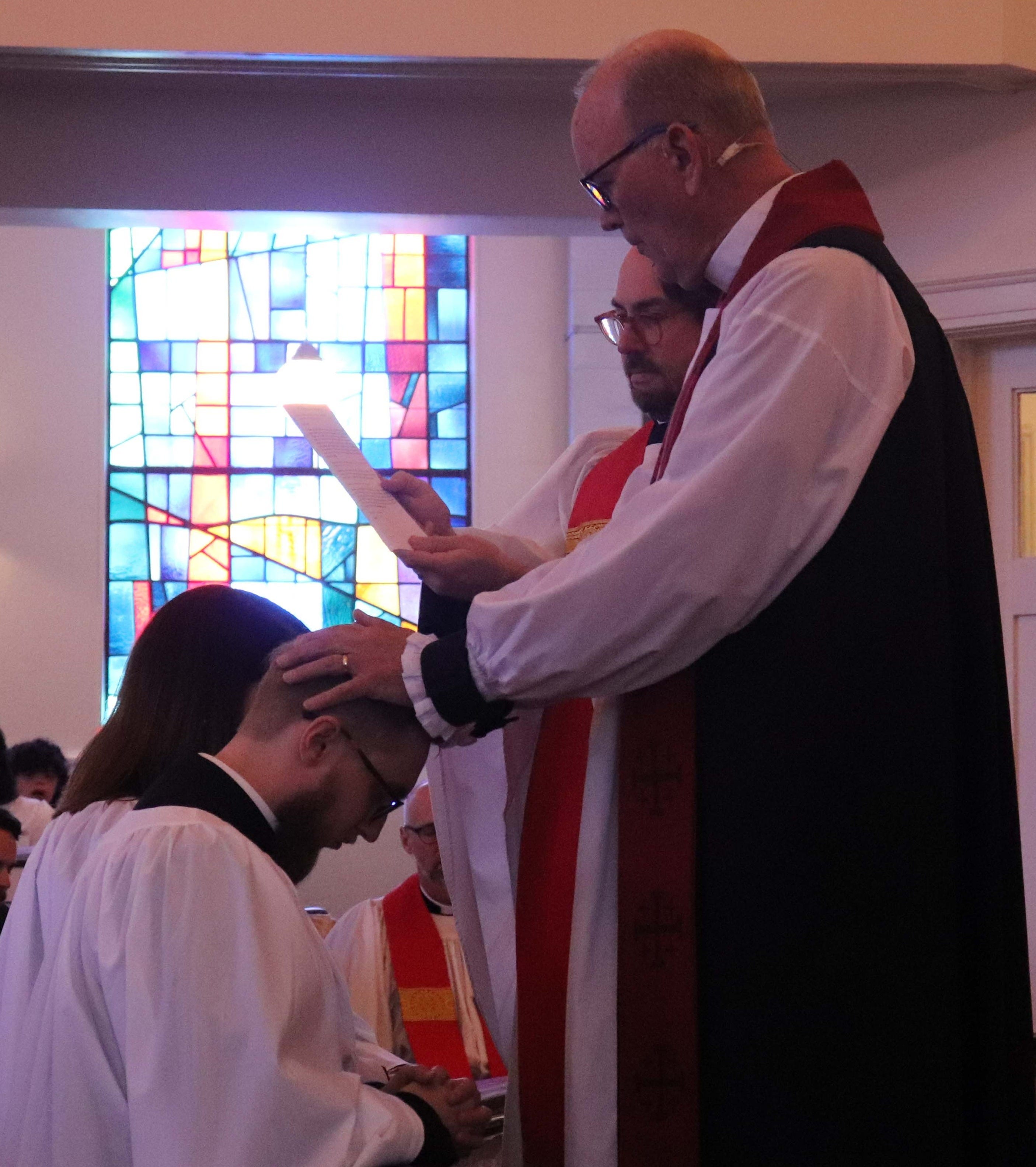
To wrap up the account of my journey to Original Methodism, I was confirmed in the Anglican Church in North America, ordained a deacon, and, good Lord willing, I will continue in ministry and be ordained a priest in due course.
A Call To Enact the Method
Though Anglicanism is a tradition where I genuinely believe Methodists can hold to the doctrine of Wesley and Whitefield, it is still in need of an injection of the piety those men zealously advocated for. Put differently, the Methodist movement in the Anglican Church has not yet accomplished all of its goals. There are four strengths an injection of Original Methodism can offer to the contemporary Anglican Church that she has been unable to completely enact since the Methodist Movement first sought to revitalize her in the 18th century. These may be natural elements of needed recovery for Methodists in their denominations as well.
Pure Gospel Preaching—In our day, as in Wesley’s, there is a desperate need for bold Gospel preachers who are uncompromising with the spirit of the age. John Wesley famously declared, “Give me one hundred preachers who fear nothing but sin and desire nothing but God… such alone will shake the gates of hell and set up the kingdom of heaven upon earth.”31 Original Methodist preaching was uncompromisingly traditionalist, a corrective to the liberalization of the Church in its day. Sin was boldly declared to be the atrocity it is, and the power of God to break the power of canceled sin was declared. We desperately need those sorts of men preaching in Anglican pulpits.
Holiness—Anglican parishes would benefit greatly from shedding ineffective modernist piety, corporate-sounding resources, and mainstream gimmicks. Reappropriating something akin to Methodist class meetings and band meetings, where accountability is emphasized and holiness is pursued, would be far more effective. These groups would be natural places for effective ongoing catechesis. But no matter the tools used, we would do well to reclaim a true holiness piety patterned by the Book of Common Prayer and the Daily Offices. Attending to the ordinances of God is the method of Methodism, and Anglicans would do well to promote attending to the ordinances of God we have received without compromise.
Traditional High Churchmanship—Great strides have been made to introduce Anglicanism to a new generation, but as folks join the ACNA, the need for catechesis in liturgy and the Christian life is only greater. There is a danger posed to all Christian traditions: losing their distinctives in the age of Bapticostalism. Original Methodism was led by High Church Anglicans who emphasized the Book of Common Prayer, wrote good hymnody, and taught the doctrine of the Articles and Homilies. Following their example, the effective use of the prayer book by adherence to its rubrics, providing regular Daily Offices in the parish, celebrating feasts and fasts, singing good hymnody, and using our formularies ought to be revitalized.
Arminianism—Finally, Original Methodism has a coherent soteriology, often called Wesleyan-Arminianism (a debatable name, for sure), that is completely compatible with classical Christian orthodoxy and the Articles of Religion. Of course, one does not need to be Arminian to be a Methodist; George Whitefield was a Calvinist, after all. Yet there is a gap between Anglo-Catholicism and Reformed theology within the Anglican tradition today. It is unfortunately being filled by generic American evangelical theology and charismatic/Pentecostal theology (what I’ve called Bapticostalism). English Arminianism is uniquely Anglican, catholic, and reformational, which makes it more appropriate to fill the gap. English Arminianism as a historic witness ought to be championed as an accepted part of the Anglican tradition over the present influx of many so-called ‘streams,’ such as the influence of Anabaptist, anti-catholic, and build-your-own-experience theologies, offering a corrective grounded in catholicity, orthodoxy, and the Reformation.
Anglicans of all stripes should consider recovering these virtues from Original Methodism. The advantage Anglicanism has in reclaiming these virtues is that the tools are already there for us. We have the same foundations our forefathers in the 18th century did: the calm verbosity of the BCP, aesthetics, catechisms, Reformed doctrine, confessions, creeds, a global jurisdiction, a catholic and ecumenical spirit, a drive for church planting, a desire to reach the lost, and all that is necessary to faithfully see a revival of the method. We just need bold, faithful men to actualize it.
Rev. Sid Johnson is a husband, father, and deacon in the Anglican Church in North America. He received his Master of Divinity from Asbury Theological Seminary. He is the editor of The Earnest Wesleyan, and you can also find his writing at North American Anglican and Holy Joys. He is on X @SidtheSquid37.
For more on Arminianism, I highly recommend this brief article: Jonathan Arnold, “Yes, Wesleyan-Arminians Believe in Predestination!,” Holy Joys, September 04, 2022, https://holyjoys.org/wesleyan-arminians-predestination/.
John Wesley, Sermon 26: “Upon Our Lord’s Sermon On The Mount, Discourse VI,” The Wesley Works Digital Edition, emphasis added. https://wesleyworks.ecdsdev.org/sermons/Sermon026
Critical scholars are suspect of how closely Wesley’s 1787 sermon follows Nelson’s The Great Duty of Frequenting the Christian Sacrifice (1707). See ‘An Introductory Comment’ in The Wesley Works Digital Edition of Sermon 101.
John Wesley, Sermon 101: “The Duty of Constant Communion,” The Wesley Works Digital Edition. https://wesleyworks.ecdsdev.org/sermons/Sermon101.
John Wesley, Sermon 45: “The New Birth,” The Wesley Works Digital Edition. https://wesleyworks.ecdsdev.org/sermons/Sermon045 See also: Wesey’s Trestise on Baptism
Steven D. Bruns, “Baptism and Regeneration: The Waters of New Birth,” in New Life in The Risen Christ: A Wesleyan Theology of Baptism, ed. Jonathan Powers. (Cascade Books, 2023), 46.
E. Harold Borwne, An Exposition of the Thirty-Nine Articles. (North American Anglian, 2022). https://northamanglican.com/an-exposition-of-the-thirty-nine-articles-article-xxvii-part-2/
Thomas Cranmer, A Short Instruction into Christian Religion: Being a Catechism set forth by Archbishop Cranmer in 1548 (Oxford University Press, 1829), 191-192, spelling and grammar modernized. https://www.google.com/books/edition/A_Short_Instruction_Into_Christian_Relig/ZDIJAQAAIAAJ
Steven Bruns’ chapter in New Life in the Risen Christ presents this as the case in careful detail by analyzing the baptismal theology of the UMC, FMC, Wesleyan Church, and Church of the Nazarene, which all hold this error in their official doctrine. His work predates the GMC, but their Catechism points to the same position (Q# 41).
Wesley’s late sermon ‘The New Birth’ is extremely clear on this, esp. IV.2. There is a drastic failure in Wesleyan theology to understand the centrality of what is normative and ordinary as it pertains to the means of grace. For example, Wesley says, “There may sometimes be the outward sign where there is not the inward grace.” Many will skip right over “may sometimes” and make the exception the rule. See: Rob L. Staples, Outward Sign and Inward Grace: The Place of Sacraments in Wesleyan Spirituality. (Beacon Hill Press, 1991), 186.
Bruns, “Baptism and Regeneration,” 63. Note: Prevenient or “preventing grace” is affirmed in Article X but is not operatively the same as regeneration.
1999 General Conference Statement, as reprinted in The CMC Handbook: A Guide to the Credentialing Process for Conference Ministerial Candidates in the Southeast Region Conference of the Free Methodist Church-USA (2021), 93
Here is a summary of Wesley’s mature ordo: “…from 1738 till his death Wesley maintained the basic ordo of baptism – present justification – sanctification – final justification – glory… even as an evangelical Wesley continued to maintain a modified Anglican ordo throughout his life; that is, Wesley’s soteriology continued to be informed by his deeply held Anglican beliefs.” Mark K. Olson, “The New Birth in the Early Wesley.” Wesleyan Theological Journal 52, no. 1 (2017), 97-98.
Don E. Saliers, “Divine Grace, Diverse Means: Sunday Worship in United Methodist Congregations,” in The Sunday Service for Methodists: Twentieth-Century Worship in Worldwide Methodism. (Kingswood Books, 1996), 32-33.
J.I. Packer, The Heritage of Anglican Theology. (Crossway, 2021), 29.
John Wesley, Letter: ‘To Westley Hall,’ December 30, 1745. https://wesley.nnu.edu/john-wesley/the-letters-of-john-wesley/wesleys-letters-1745/. Westley Hall is a fascinating figure who, in some ways, completely opposes John with his rank enthusiasm and, in another, precedes him in abandoning church order. Like John Wesley, Hall drew the criticism of Charles for his unorthodox marriage, but Hall descended further into heresy and immorality. Unfortunately, Hall would never recover from his escapades.
John Wesley, Letter: ‘To James Clark,’ July 3, 1756. https://wesley.nnu.edu/john-wesley/the-letters-of-john-wesley/wesleys-letters-1756b/.
John Wesley, Letter: ‘To Our Brethren in America,’ September 10, 1784. https://wesley.nnu.edu/john-wesley/the-letters-of-john-wesley/wesleys-letters-1784b/.
John Wesley, Letter: ‘To Barnabas Thomas,’ March 25, 1785. https://wesley.nnu.edu/john-wesley/the-letters-of-john-wesley/wesleys-letters-1785a/.
Charles Wesley, Epigram V in ‘MS Ordinations,’ ed. Randy L. Maddox. (Duke Center for Studies in the Wesleyan Tradition, 2014), 5. https://divinity.duke.edu/sites/default/files/documents/58_MS_Ordinations.pdf
John Wesley, Letter: ‘To Our Brethren in America.’
Joseph Pilmore, Letter: ‘To Charles Wesley,’ April 10, 1786, in Charles Wesley In-Correspondence and Related Items (1781–88), (Duke Center for Studies in the Wesleyan Tradition, 2025), 205. https://divinity.duke.edu/sites/default/files/documents/CW%20In-letters%201781-88.pdf.
This argument does not necessitate an unbroken chain. Visible connection is more about jurisdiction and lawful inherited authority than an unbroken chain. I am unconcerned with finding a perfect unbroken chain, though it would be pleasing to have (and I would wager we Anglicans do have it).
I will simply note here that to take John’s relationship with his saintly mother and exploit it to argue for women’s ordination is a disagreeable act worthy of the highest degree of prejudice against it.
For more on deaconess as an ancient ordained office in the church that aligns well with traditional Methodism, I recommend Sean Luke’s work at Anglican Aesthetics as a starting place, “The Ordained Deaconess.”
John Wesley, Sermon 112: “On Laying the Foundation of the New Chapel,” The Wesley Works Digital Edition, https://wesleyworks.ecdsdev.org/sermons/Sermon112.
J.I. Packer, Heritage, 35.
Larry Sanger, “Why the ACNA,” Aug 26, 2025. https://larrysanger.org/2025/08/why-the-acna/.
William Burt Pope, A Compendium of Christian Theology: Being Analytical Outlines of a Course of Theological Study, Biblical, Dogmatic, Historical, Volumes 1-3. (Beveridge and Co., 1879), Vol. I, 20-21.
John Wesley, The Journal of the Rev. John Wesley, ed. Nehemiah Curnock. Vol. 2. (1909–1916), 274-275.
John Wesley, Letter: ‘To Alexander Mather,’ August 6, 1777. https://wesley.nnu.edu/john-wesley/the-letters-of-john-wesley/wesleys-letters-1777/
I am Global Methodist clergy, and I approve this message.
Not because I agree with every point or conclusion, but because this is exactly the conversation that needs to be had, and it is being had at exactly the right level.
Methodists need this kind of criticism. It forces us to clarify who we are, what we are about, what we have inherited, and what we are called to recover.
At the same time, this raises the real question: if there is no meaningful distinction between orthodox Anglicanism and orthodox Methodism, then there is little reason to have both an ACNA and a GMC.
I plan on restacking this for my own audience. Bravo.
Sid, as a lay Methodist, I appreciate your writing style. You write in a way that a non seminary trained person can read and follow.
At the risk of being impertinent I have to take issue with your framing of the "illicit" ordination of Coke by Wesley. Coke was named a General Superintendent and not a Bishop. The Bishop title was conferred when the MEC formed.
Our church disaffiliated from the UMC and we operate today as an independent church. Our intent is to remain a Wesleyan -Methodist body and avoid the drift towards the "non-dom" Baptist approach that is common in the southern US.
As time progresses, I become more intrigued by the common theology of the orthodox Methodist Churches and the Anglican Church.
Again, thanks for your post and God Bless You for keeping the orthodox faith alive.