


Marriage is perhaps one of the oldest institutions in the world. The very concept is written into the creation narratives in Genesis. Adam is alone, and God sees that it is “not good”—so he creates Eve out of Adam’s rib (Gen 2:18). No other relationship in the Bible receives as much attention as the marriage relationship, and God frequently compares his own relationship to Israel and Christ’s relationship to the Church to marriage. Just as frequently, the quality of the marriage relationship is a significant factor in the comparison. God compares Israel to an unfaithful, adulterous wife throughout the Old Testament; in the New Testament, the Church is to be presented as a faithful Bride “without spot or blemish” to the Bridegroom, who is Jesus Christ (Eph 5:27).
It’s no secret that Western civilization has made a mockery of the marriage institution. Whereas the Bible says that the relationship between a husband and wife is symbolic of the relationship between God and his people (Israel and the Church), modern society in the West regards it as a mere piece of paper, a contract to be discarded when it is no longer to one’s benefit, or when something better comes along. Although the divorce rate never reached the levels alarmists were concerned about in the mid-to-late 20th century, it is true that many marriages end in divorce. It is equally true that many divorcees go on to marry again, perhaps indicative of a hope that things will be different next time.
“It’s no secret that Western civilization has made a mockery of the marriage institution.”
But it is also clear that that was not what God had in mind when he created the marriage institution. Even when God’s people are unfaithful to him, he does not divorce his people; in fact, God declares in plain words, “I hate divorce” (Mal 2:16 NLT). Ancient Israel freely permitted men to divorce their wives, but when the Pharisees questioned Jesus on this point, he said that it was only due to the hardness of the Israelites’ hearts that God permitted divorce (Matt 19:8). In fact, Jesus said that divorce does not even completely dissolve the marriage bond: when challenged by the Pharisees, Jesus doubled down: “I say to you, whoever divorces his wife, except for unchastity, and marries another commits adultery” (Matt 19:9 NRSV).
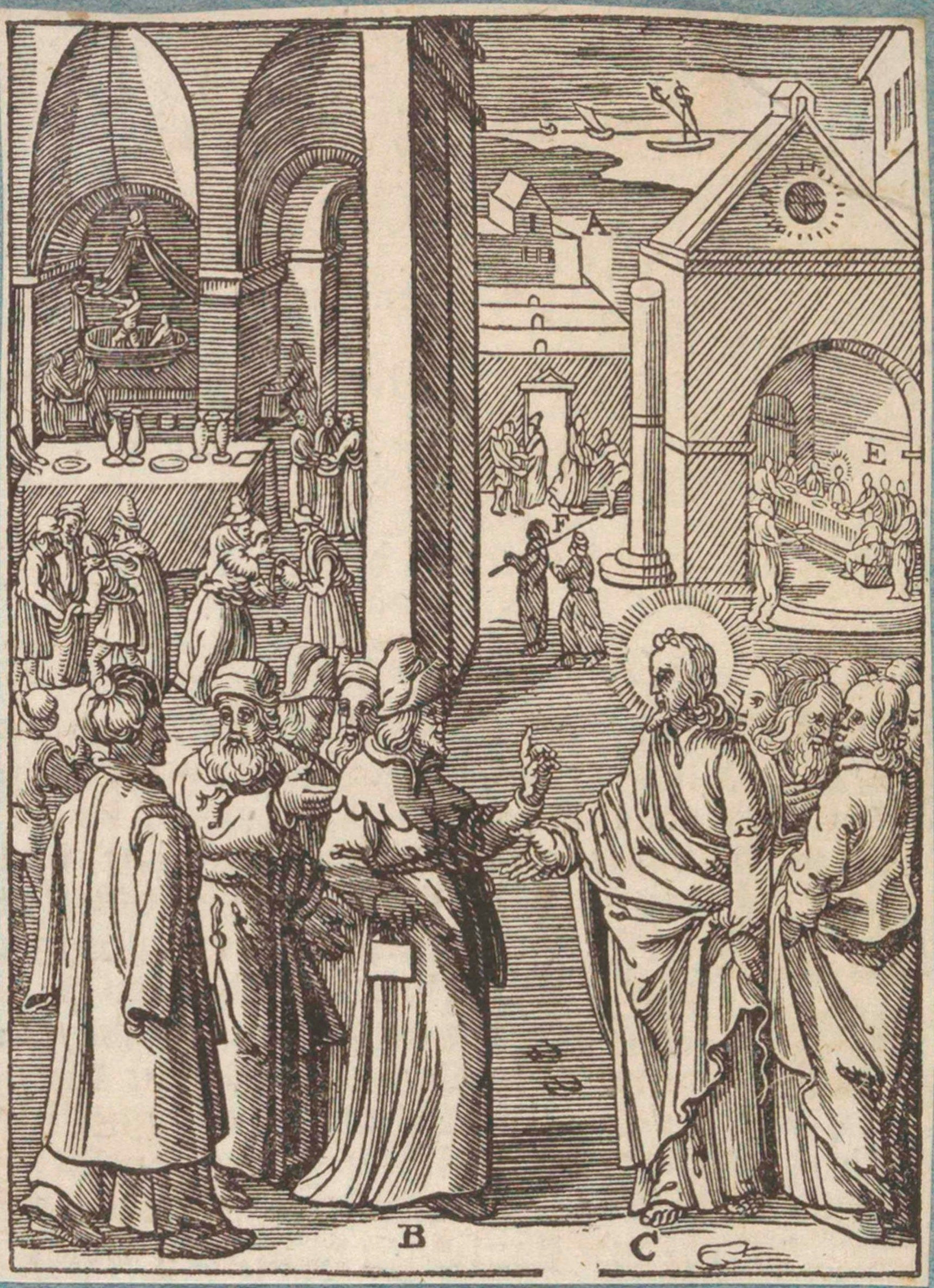
As A. Andrew Das notes in his book, Remarriage in Early Christianity, Matthew wrote to a Jewish audience, where only men were able to divorce their wives. In Mark’s parallel account—written to a Gentile audience familiar with Roman society where both men and women could initiate divorce proceedings against their spouses—the Gospel writer records Jesus’ words this way: “Whoever divorces his wife and marries another commits adultery against her; and if she divorces her husband and marries another, she commits adultery” (Mark 10:11-12). There is no exception for adultery. The term porneia is rendered “unchastity” in Matt 5:32 and 19:9 (NRSV), but Das shows it to be frequently used as the female equivalent of the distinctly male-only “adultery” of moicheia, saying, “The term porneia more frequently refers to women’s violation of the marital relationship since ‘adultery’ (moicheia) was used primarily in reference to men’s activity.”1 In Luke’s parallel account, there is likewise no exception for the adultery of a spouse—remarriage after divorce is adultery. Even Matthew’s account arguably only allows divorce for the cause of adultery, and not remarriage (as Das argues in Remarriage, 169-178).
The Early Church’s Witness
Although some modern scholars argue that the Biblical writers meant otherwise (including Wesleyan scholars Craig Keener and Ben Witherington, whose arguments Das engages with throughout Remarriage), Wesleyans also look to what Wesley called “Christian antiquity,” the early church fathers (the major leaders of the early church) of the first 500 years A.D. as a major hermeneutical authority.
This is incontrovertibly the interpretive position of the early church: remarriage after divorce while the spouse is still alive is not an option for the faithful Christian. St. Augustine of Hippo wrote in Faith and Works, a work instrumental in Protestant reformer Martin Luther’s reclamation of the doctrine of justification by faith alone, that he would refuse to even baptize non-Christians who had been divorced and remarried. He wrote, “But these persons are not admitted [to baptism], because the Lord Christ declares without any doubt that such marriages are not marriages but adulteries.”2 Likewise, St. Clement of Alexandria wrote, “Guilt in this does not attach merely to the man who divorces her. It attaches also to the man who takes her on, since he provides the starting point for the woman’s sin.”3 He clearly declares the man who remarried a divorced woman while her first husband was still alive was an adulterer, no exceptions.
Augustine also wrote, “God created marriage. As the union is from God, so divorce is from the devil,” and elsewhere he wrote, “a woman is bound, as long as her husband is alive. As a consequence, therefore, the husband is also bound, as long as his wife is alive. This bond renders any further union impossible without the implication of adultery. Hence, four adulterers are produced of necessity from the two marriages, if the wife remarries and the husband marries an adulteress.”4
St. John Chrysostom makes no allowance for remarriage either, regardless of whether one had committed adultery before the divorce; his position was that a man who divorced his wife was an adulterer for the simple fact that he had divorced his wife because, given socio-economic realities in the fourth and fifth centuries, she would be forced to remarry, and this was, by definition, adultery. When the wife had committed adultery, it was necessary for him to divorce her, Chrysostom wrote, in order not to share in her sin, but even here he does not allow for either party to remarry.5
The early church fathers of the earliest centuries (fifth and earlier) came to the conclusion that remarriage after divorce is no different than adultery. And yet, although there was clearly an early consensus about divorce and remarriage, at some point in the intervening centuries, that consensus began to break down in various ways, although the core of the doctrine largely held until the mid-to-late 20th century.
Later Developments
Notably, the modern Eastern Orthodox Church allows remarriage after divorce, though subsequent marriage ceremonies remove some of the joyful aspects and include more prayers of penitence. Generally speaking, its rule is that it blesses the first marriage, performs the second, tolerates the third, and forbids the fourth. The Roman Catholic Church comes close to the early church’s view, as it still disallows remarriage generally. But it adds the nuance that there are certain factors that would allow the Roman Catholic Church to annul a marriage if the requisite conditions are not met (for example, one such condition is that the divorced person was not Roman Catholic when married the previous time).
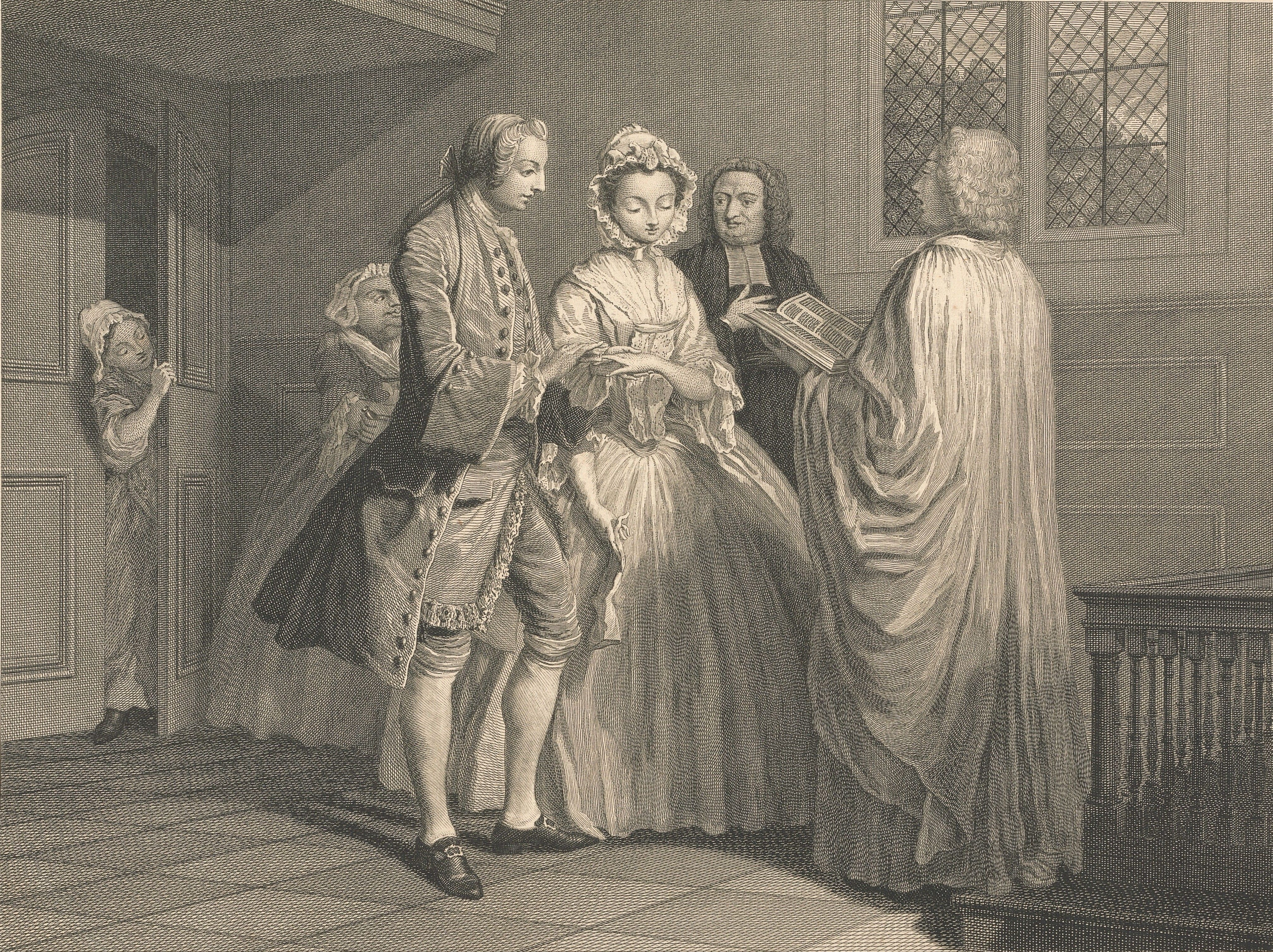
The historical Protestant position was that divorce is only acceptable in the case of adultery on one spouse’s part, and that remarriage is permissible only for the spouse who was not adulterous, what some have called “the innocent party.” This was the historical position of Lutheranism, and it is also the historical position of Methodism. The Methodist Episcopal Church’s 1884 Book of Doctrines & Discipline declared, “No divorce, except for adultery, shall be regarded by the Church as lawful; and no Minister shall solemnize marriage in any case where there is a divorced wife or husband living: but this Rule shall not be applied to the innocent party to a divorce for the cause of adultery, nor to divorced parties seeking to be reunited in marriage.”6 As late as the 1956 Book of Discipline, the MEC’s successor body, The Methodist Church, held the same view, though it added the additional cause of “other vicious conditions which through mental or physical cruelty or physical peril invalidated the marriage vow,” and made violation of the rule chargeable as “an act of maladministration.”7
Formed during the Sexual Revolution of the 1960s from a merger of The Methodist Church and the Evangelical United Brethren Church, the United Methodist Church compromised the historic Methodist position further and watered down its own position on divorce and remarriage to state “when a married couple is estranged beyond reconciliation, even after thoughtful consideration and counsel, divorce is a regrettable alternative in the midst of brokenness” and “Divorce does not preclude a new marriage.”8
A Return to Roots?
Though only recently launched by traditionalist refugees from the United Methodist Church, the more conservative Global Methodist Church (GMC) does not have a teaching on divorce and remarriage in its own Book of Doctrines & Discipline. The only reference to marriage comes in ¶ 302.7, which declares “We believe that human sexuality is a gift of God that is to be affirmed as it is exercised within the legal and spiritual covenant of a loving and monogamous marriage between one man and one woman (Ex. 20:14; Matt. 19:3–9; Eph. 5:22–33).” The GMC’s roots are in the Wesleyan-Holiness wing of Methodism, however, and in the wider Wesleyan-Holiness movement we still find periodic affirmations of the indissolubility of marriage. One example comes from the early 20th century Free Methodist preacher Jerry Miles Humphrey, who divorced and remarried, later repented of the remarriage, and wrote A Word Of Warning On Divorce-Remarriage. A second example comes from Daniel S. Warner, one of the founders of the Church of God (Anderson, Indiana). In Warner’s case, his wife divorced him after they had been living separately for seven years, but he was convinced that any remarriage while his wife was alive would be adultery—he only remarried after she had died.
The Global Methodist Church has several petitions coming before its 2026 General Conference that would at least strengthen the church’s teaching on marriage, divorce, and remarriage by exalting the sacred character of the union and advising clergy to be extremely cautious about performing marriages for divorced persons whose spouses are still alive. Although not the position of the early church (which made no allowance for even an “innocent party” to remarry), it would at least move the GM Church back toward the classical Protestant (and Methodist) position.
“The fact remains: Jesus condemns divorce and remarriage.”
But even should these not pass—and for those Christians who are not affiliated with the Global Methodist Church—the fact remains: Jesus condemns divorce and remarriage. He said himself that the only reason it was allowed among the ancient Israelites was because of the hardness of their hearts, but he held up a different standard when he preached the Sermon on the Mount, a higher standard which condemned divorce and remarriage after divorce alike.
Pastoral Considerations
Beyond this, there are also pastoral considerations. The most obvious is that encouraging remarriage after divorce (while the spouse is still alive) is encouraging adultery. Many Christians, including clergy, experience divorce, and many remarry. (I myself am divorced and have not remarried.) God often chooses to use broken people to bring about his ends, but this does not mean that we can assume that he blesses our sins simply because he works in and through us despite them. Jesus said, “Not everyone who says to me, ‘Lord, Lord,’ will enter the kingdom of heaven, but only the one who does the will of my Father in heaven. On that day many will say to me, ‘Lord, Lord, did we not prophesy in your name, and cast out demons in your name, and do many deeds of power in your name?’ Then I will declare to them, ‘I never knew you; go away from me, you evildoers’” (Matt 7:21-23 NRSV).
The divorce itself often results in many broken relationships, as friends and acquaintances end up ‘siding’ with one or the other of the married couple. Becoming isolated from one’s peers and support networks is an additional hardship, and the temptation remains to chase after a new romantic relationship (or even a new marriage) immediately. The world’s wisdom here is that the best solution to a broken heart is a new romance, but this is not godly wisdom. Church culture can frequently be an isolated and isolating experience for single Christians, and this remains true for the newly-single. The church needs to be far better about offering fellowship to single Christians separate from any efforts to try to play matchmaker, and this is what a divorced person is—single. In fact, the church needs to discourage matchmaking where divorced persons are involved, simply for the sake of their immortal souls. (Keeping in mind the exception being if the divorcee’s spouse has already died.)
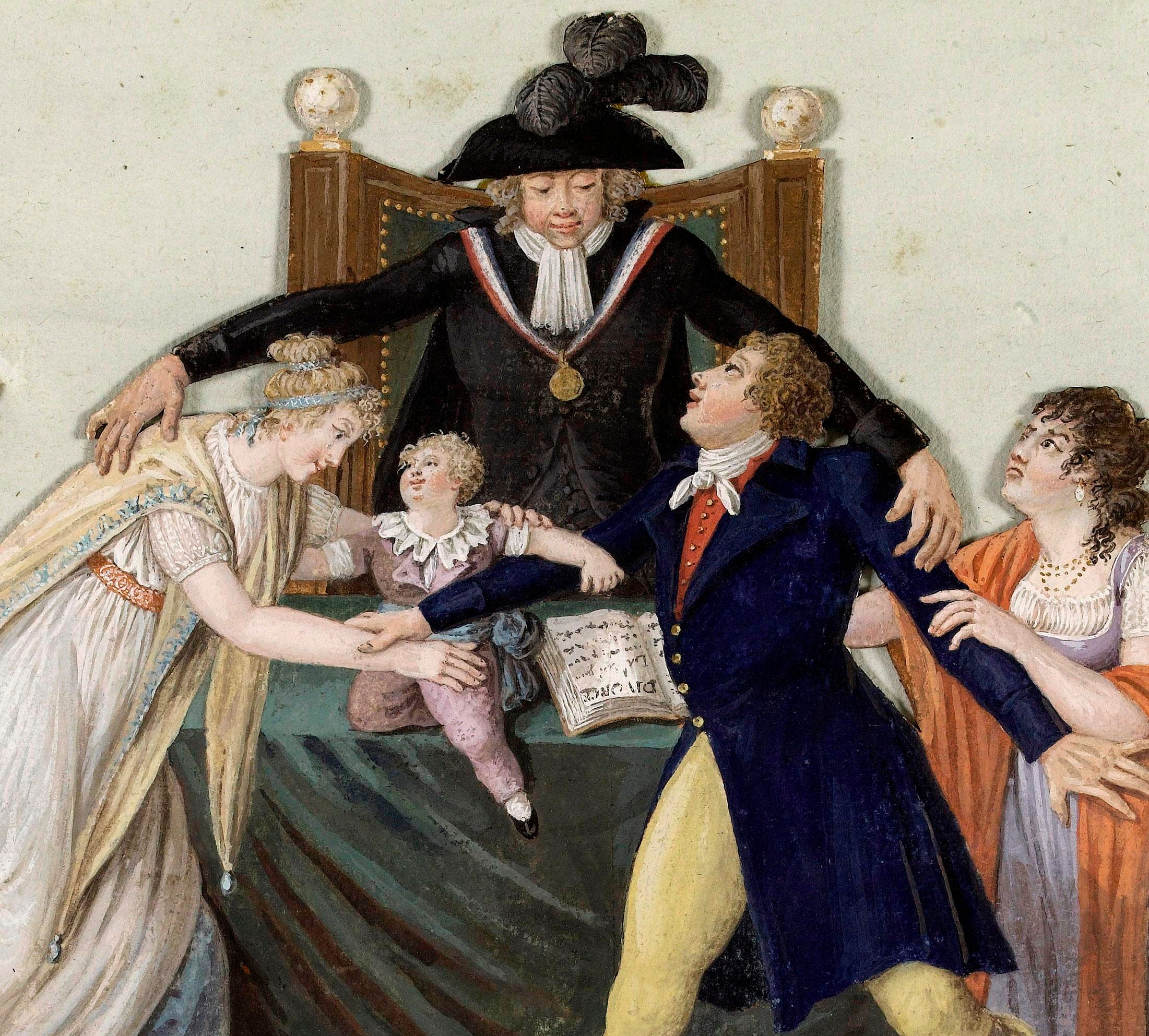
If there were children as a result of the broken marriage, this can also add additional complications, as that means more relationships which can become strained or break as a result of the divorce. Recent research shows that it does not matter whether the children were adults or minors when the divorce occurred, either. I know of women whose adult sons sided with their father rather than her, and have not spoken to her since; and men whose daughters refuse to speak to their father.
Considerations in the Life of the Church
How do we involve those impacted by divorce in the life of the church? Modern Methodism rarely restricts the reception of Holy Communion, regarding it as medicine for the soul (to paraphrase the early church father Ignatius of Antioch) and a converting means of grace which draws anyone who takes the bread and cup nearer to God (though one should be baptized before taking Communion, the Table is rarely the place to be asking someone the question, “Have you been baptized in the Name of the Father, Son, and Holy Spirit?”). With the demise of the class meeting requirement in Methodism, a return to stricter church discipline also seems unlikely.
But the Apostle Paul warns that “whoever eats the bread or drinks the cup in an unworthy manner, shall be guilty of the body and the blood of the Lord” (1 Cor 11:27 NASB). As Wesley rightly points out in his sermon “The Duty of Constant Communion,” this meant that we should not be gluttons or getting drunk at the Communion Table. Instead, Wesley says that to eat and drink in a worthy manner means that we must repent and then partake—not that we should avoid partaking in Communion at all.
But what does repentance look like for the initiator of divorce against his or her spouse? What does it look like for a remarried spouse whose first spouse is still alive? Even under the most generous reading of the Biblical passages on divorce and remarriage, the other spouse’s adultery is the only justifiable reason to initiate a divorce. Repentance for the initiator of divorce may mean reconciling with his or her spouse (depending upon the circumstances), but repentance for the remarried is more problematic, as biblically they are engaged in adultery even while civil society and likely ecclesiastical communities have tied them legally and spiritually to a new spouse. Does the church deny them Communion altogether, or encourage their divorce on the grounds that they remain in adultery (what St. Augustine would have referred to as an “adulterous marriage”)? Rather than refusing, perhaps it is best to leave it to their own consciences and the prompting of the Holy Spirit, trusting that he will lead them into the right course of action in his own timing (the right course of action is never in doubt here—ceasing from adultery—but their response to God’s timing may be). That said, as to take Holy Communion without repentance (“unworthily”) is spiritually harmful, perhaps it would be better to at least warn communicants about the consequences of unrepentance before they receive Communion in such a state. What cannot be denied is that it raises thorny issues that are not present in the spiritual lives of those who have not remarried.
What of those whose divorces are for abuse (a term which covers physical, emotional, financial, spiritual, mental, and other sorts of harm) or the catch-all term “irreconcilable differences?” The argument could be made that such circumstances might justify divorce, but not remarriage—after all, in the Gospels, Jesus’ teachings on divorce always pair divorce and remarriage together. In Matthew, the man who divorces his wife is guilty of adultery unless she herself was adulterous (Matt 5:32, 19:9), but marrying a divorced woman under any circumstances made both of the newly-married spouses guilty of adultery. In Mark, the actions are explicitly joined together: “whoever divorces his wife and marries another” and “if she herself divorces her husband and marries another man,” they both commit adultery (Mark 10:11-12). Luke echoes Matthew, though without any exception for adultery: “Everyone who divorces his wife and marries another commits adultery, and he who marries one who is divorced from a husband commits adultery” (Luke 16:18).
Nor does Paul’s advice on divorce differ: “But to the married I give instructions, not I, but the Lord, that the wife should not leave her husband (but if she does leave, she must remain unmarried or else be reconciled to her husband), and that the husband should not divorce his wife” (1 Cor 7:10-11). Even in the case where only one spouse is a Christian, Paul tells the Christian spouse not to divorce the unbeliever, but only to allow the unbelieving spouse to divorce him or her (vv. 12-15). No mention is made of remarriage, and Paul explicitly says the woman who leaves her husband should remain unmarried, which is also the witness of the early church fathers.9
Further Considerations
When a marriage has truly broken down and the husband and wife are hostile to one another, it may make sense on some level for a divorce to take place, simply to divide up assets and minimize the damage that a hostile spouse could do to the other. A husband or wife remains liable in American civil law for contracts and debts incurred by his or her spouse, and a divorce may disentangle them from one another legally and financially. If there is a history of domestic violence in the home, a divorce may also make sense simply as a matter of physical safety (divorce’s removal of legal ties may help make it easier for one spouse to physically avoid the other).
Yet even here, it is the witness of the early church, of the Apostle Paul, and of the Lord Jesus himself that remarriage is out of the question for the faithful Christian, as there is no disentangling oneself from one’s spouse in God’s eyes except by one party’s death. As pastors, we are shepherds given the responsibility of caring for those sheep the Lord has placed in our charge. That responsibility extends to the whole person, and as such we cannot encourage or remain silent about anything that the Lord regards as sin, any more than we can encourage someone to remain in a harmful or dangerous situation.
The Rev. James Mahoney is an ordained Elder in the Western States Annual Conference of the Global Methodist Church, and has pastored churches in Indiana and Arizona. He holds a Master of Divinity from Asbury Theological Seminary and a Master of Library Science from Indiana University. You can find him on X at @JamesEMahoney.
A. Andrew Das, Remarriage in Early Christianity, (Eerdmans, 2024), 143.
Das, Remarriage, 232.
Clement of Alexandria, Stromateis 2.23, as quoted in eds. Hall & Oden, Ancient Christian Commentary on Scripture: New Testament II: Mark, (IVP, 2005), 129.
Augustine of Hippo, Adulterous Marriages 2.9.8 as quoted in ACCS Mark, 129.
Das, Remarriage, 233
1884 Book of Doctrines & Discipline of the Methodist Episcopal Church, 33.
1956 Book of Discipline of the Methodist Church, 130, ¶356.
2012 Book of Discipline of the United Methodist Church, 109-110, ¶161C.
It might be inferred that Paul would allow a husband to leave his wife if he himself remained unmarried, but the literal meaning does not allow the husband to initiate divorce at all.

I'm am shocked, but in a good way, that a Global Methodist wrote this. While I agree with the article I don't think the GMC will change its position on divorce and remarriage. We have too many divorced and remarried people in the pew, in the pulpit and in the counsel of Bishops....
Also side note: one of the reasons why my generation (millennials) accepted gay marriage so quickly is because our divorced baby boomer parents had no credibility when they lectured us about the sanctity of marriage.... It's hard to oppose same sex marriage when one does mental gymnastics to normalize divorce and remarriage......
This is likely to cause a stir, but I'm glad that you are pushing this conversation. If we are going to experience the full renewal we pray for, that will require repentance - and "same sex marriage" was not the only way that our culture has departed from God's plan for marriage. Acceptance of easy divorce, and "no fault" divorce, came first. Even that was made possible by understanding marriage as something that exists for my own personal happiness or romantic fulfillment, which is not the Biblical teaching. It is right for the church to push back against these miunderstandings.
That said, I do take a somewhat different view from you. I agree we should revere and take seriously what the Early Fathers teach. I believe you are correct that the Earliest fathers simply do not allow divorce and remarriage at all. I note that they also required absolute pacifism (Christians could not be soldiers or serve in Law Enforcement) and they enforced extremely rigorous church discipline (even penitent church members were still denied Holy Communion for YEARS for certain sins); so it may be that the later developments are not simply a "falling away" but are actually a pastorally prudent "nuancing" of the tradition.
Most important is what Scripture says, and here it seems to me that Christ does allow divorce in cases of adultery in Matthew 19 and also St. Paul allows it in 1 Corinthians 7 in cases where a non-believing spouse abandons the believing spouse. In such cases, if remarriage were not permitted, then how can we say the spouses are actually "divorced" if they are still "bound"? Yet St. Paul specifically says that such divorced persons are "not bound" (1 Cor. 7:15). In the Christian West the idea developed that divorce may be permissible in cases of adultery, abuse, or abandonment. I think this is based on good Biblical logic, and I believe that in most cases remarriage should be considered an open possibility, but in practice all of that will require pastoral discernment. Yet in every case, "God hates divorce" because it always is a breakdown of love and covenant promises, and always results from sin in "hardened hearts." But hating something is not the same thing as absolutely forbidding it. No doubt, the "innocent party" very likely also hates their divorce, and all that led up to it; but this does not mean that they cannot also accept it and then find some good gifts in a new marriage.