


On April 1st of this year, 2026, the Global Methodist Church put forward a new confession, the Articles of Faith, that is proposed to replace the 1960’s Evangelical United Brethren (EUB) Confession of Faith and the much older Twenty-Five Articles of Religion of the Methodist Church. Being an abridgement of the Thirty-Nine Articles of Religion of the Church of England created by John Wesley, the Twenty-Five Articles connect Methodism directly with its Protestant Reformational heritage in general and the Church of England in particular. However, the potential replacement of the Articles of Religion threatens to sever the connection permanently.
Protestant Orthodoxy
Depending on one’s perspective, Wesley’s Methodist movement could either be seen as the third Reformation in England (with Oliver Cromwell and the Puritans being the second Reformation in English Christianity) or simply the completion of a very long and slow process of Reformation in the British Isles. Regardless of these different historiographical interpretations, John Wesley was firmly rooted in historic Reformational Protestantism. John Wesley, like many Anglicans before him (such as William Whitaker, Archbishop William Laud, and William Chillingworth), affirmed Sola Scriptura. In fact, Wesley affirmed all five Solas of the Protestant Reformation and saw himself firmly within the Protestant camp.
Now that being said, one of the main criticisms against the Twenty-Five Articles among Methodist theologians was that the Articles lacked our evangelical Arminian theology, that the Articles were merely “Arminian” in the sense that Wesley stripped away any of the Articles that were ambiguous enough to be interpreted in a Calvinistic sense. The Articles merely established a basic Protestant orthodoxy.
However, basic Protestant orthodoxy is currently not in style! Despite basic Protestant orthodoxy being a very low bar, we are having a very difficult time reaching it. In 21st-century American Christianity, and in Wesleyanism in particular, there has been an unmistakable increase in fascination with Eastern Orthodoxy, Roman Catholicism, and Anglo-Catholicism. The last of the three being the very movement that drove once loyal British Methodists out of the Church of England in the 19th century. What is more, while Calvinism has dominated “Internet Theology” since the beginning, there is currently an unmistakable resurgence of Romanism in “Internet Theology” as well.
My point in saying all of this is straightforward: Orthodox Protestantism is on the decline; the supposed “Anti-Catholic” articles of the Methodist Articles are more relevant than ever. The bulwark that protected Methodism from contemporary Methodist theologians has now been breached by the Global Methodist Church if the new confession prevails. The door for non-Protestant theologies will be opened. Just as the Tractarians downright ignored the Thirty-Nine Articles in order to transform the Church of England away from its Protestant moorings, the same is now poised for the Global Methodist Church. Will history repeat itself?
Contemporary Challenges
That being said, there is much more to the story. Let us begin by examining one of the Anti-Catholic articles in particular, Article XV – Of Speaking in the Congregation in Such a Tongue as the People Understand. The article states, “It is a thing plainly repugnant to the Word of God, and the custom of the primitive church, to have public prayer in the church, or to minister the Sacraments, in a tongue not understood by the people.”1The justification given by the GMC committee for not keeping this article in the new Articles is that the article is originally directed against the Latin Mass from the 16th century and is therefore no longer relevant.2
I wonder if those who sit on the GMC commission do not keep up with “Internet Theology” and the resurging Romanism that is found upon there! But more importantly than that, I found at the undergraduate and graduate levels, my Protestant professors seldom, if ever, engaged with conservative varieties of Catholicism. Colleges and seminaries often ostracize conservatism, both in its Catholic and Protestant flavors. This skews people’s understanding of Roman Catholic theology.
When one examines the Second Vatican Council, it will be discovered that the latest of the Catholic ecumenical councils did not abolish the Latin Mass; rather, they merely allowed congregations to perform the Mass in their indigenous vernacular languages if they so choose.3 But that is the point. As soon as Catholics were given the option to have services in a language that they could understand, the Catholic world became Protestant overnight. (That being said, if a congregation were to prefer Latin Mass, then they could still have it, and there is a current well-documented resurgence in interest and attendance of Latin Masses.)
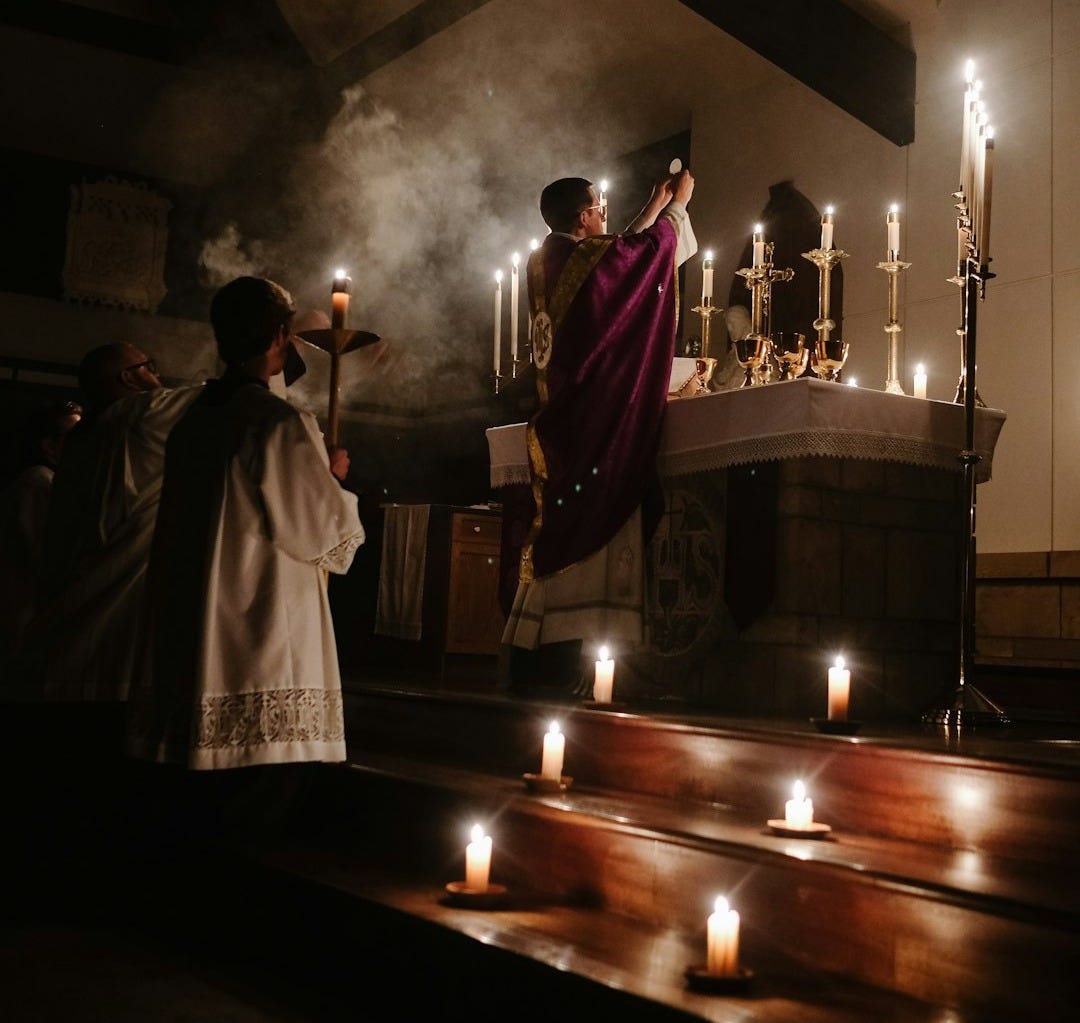
Does Vatican II mean that the anti-Catholic Methodist article is irrelevant? No, not at all. We Methodists are not postmodernists nor Buddhists. We believe in permanent things; we believe in eternal truth that transcends time and space. While the context has changed, the truth of Article XV remains. Churches should not have services in languages nobody understands. This is a real problem that continues to plague the church today. Let me give you three examples.
First, there is the issue of Pentecostalism. It has been my experience that the speaking of tongues is not often accompanied by an interpreter. The orderly practice laid down by St. Paul is seldom followed. While I am no cessationist, and I do believe that the gifts of the Holy Spirit are for today, the fact remains that Pentecostal and Charismatic practice is often out of order and is undoubtedly growing in certain Global Methodist circles.
The second example is multiculturalism. I was a student at Asbury Theological Seminary in Wilmore, KY, when Donald Trump was serving his first presidential term. I do not know what Asbury is like now with Trump back in the White House, but when I was there, Christian Nationalism—a term I never heard of at that point in time—was suddenly the greatest threat to humanity. Furthermore, to my great disappointment, Asbury, a racially diverse international school, confounded evangelism and missionary zeal with the political phenomenon of multiculturalism, a political movement that was created in the 1980s by Marxist sociologists.
I remember very distinctly attending a chapel service in which we essentially celebrated multiculturalism and condemned the much-hated concept of nationalism. The worship for the chapel service was conducted in an African language (I can’t remember what language it was in, but it was not French). No one sang the songs. Normally, Asbury services are exhilarating given the immense participation of the congregants, but in this service, nearly everyone struggled to mumble the words of the songs that were in a foreign language that over 90% of us could not understand. I remember thinking to myself that in order to worship at the altar of multiculturalism, the Protestant Reformational principle of having church services in a language the people can understand was completely thrown under the bus.
Growing up United Methodist, this is not new to me. I have attended UM services where a song was in Spanish even though none of the predominantly white and likely Baby-Boomer-generation-congregation knew the language. The lack of participation in the congregation was already at a mumble drowned out by an organ; the language change made the service empty of worship! Once again, in order to worship at the altar of multiculturalism, a solid Protestant principle was disregarded.
Now in fairness, liberals are not the only ones who break this solid principle of Protestantism. Consider this third and final example. Here in south Texas, there are Spanish-speaking Methodist congregations, with some Methodist pastors not even knowing any English. I know from experience there are conservative small-town Methodist folks here in Texas who do not like that reality. In their mind, those Spanish-speaking Methodists should learn English.
While I agree, as an American citizen, that English should be the official language of the United States and that foreign immigrants should learn our language I also understand that making English the official language does not exclude people from speaking other languages in the privacy of their own homes or in voluntary organizations that do not require mandatory attendance, such as a church. Should we really bar people from worship in the kingdom of God until enough years have passed for them to learn a new language? Of course not! Learning a new language is hard, and it can take years to be fluent and comfortable in it. The English language, while it should be necessary for American citizenship, is not necessary for citizenship in the Kingdom. So, at times conservatives also break the Reformational principle as well. This problem is universal.
Much more can be said about the so-called “Anti-Catholic” articles. For example, I have not even touched upon Article XI – Works of Supererogation and its complete relevance towards Judaism, Islam, and Pure Land Buddhism. (Isn’t the Global Methodist Church supposed to be global in its concerns?). But nevertheless, I digress. I must pivot so I can touch upon the much-forgotten Anti-Anabaptist article and its removal from the new proposed GMC Articles of Faith.
The Issue of Property
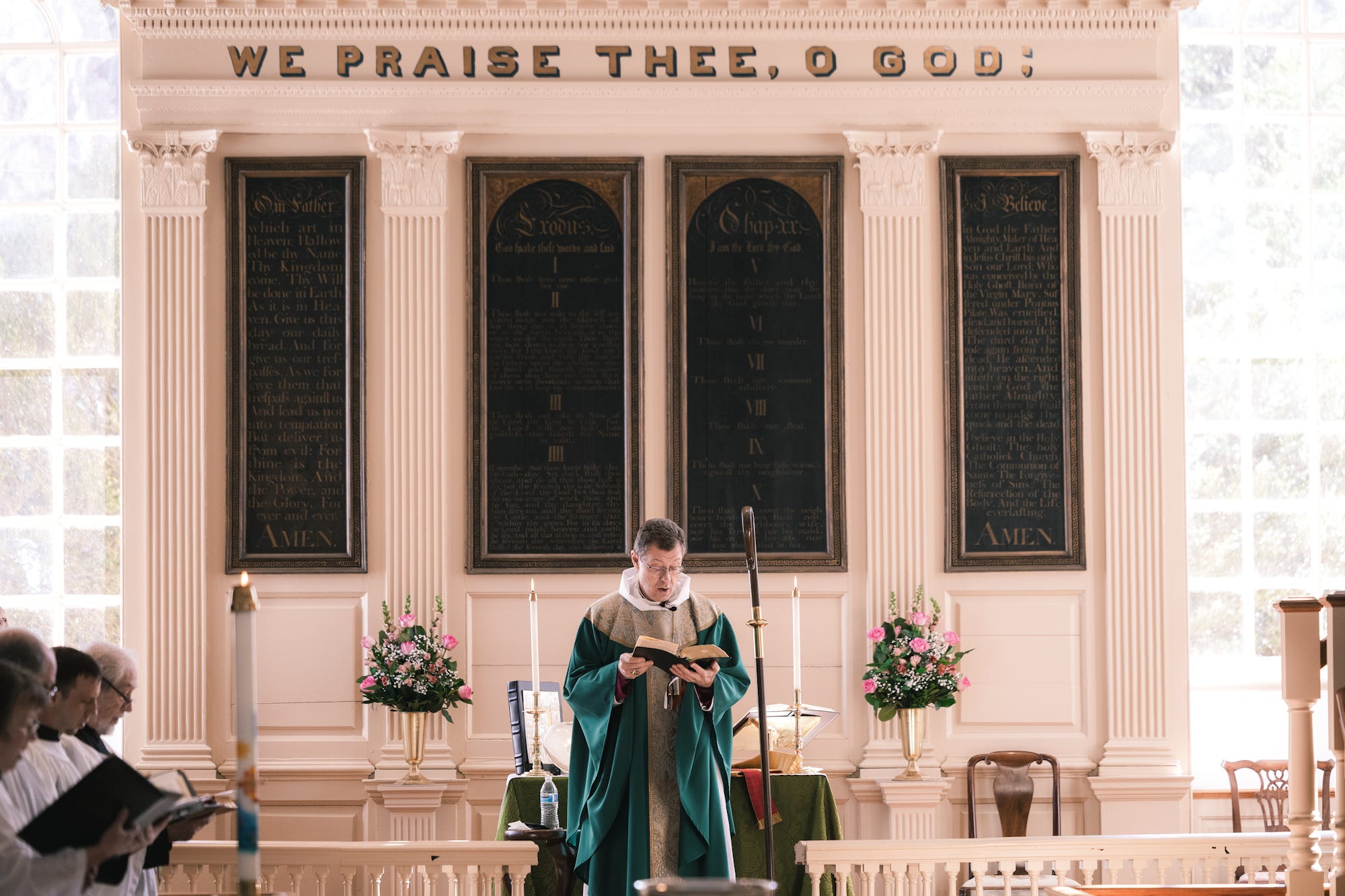
Article XXIV – Of Christian Men’s Goods says the following, “the riches and goods of Christians are not common as touching the right, title, and possession of the same, as some do falsely boast. Notwithstanding, every man ought, of such things as he possesseth, liberally to give alms to the poor, according to his ability.”4 Here the proto-communism of the Anabaptists is condemned and private property rights affirmed. Most people don’t realize this, but technically speaking, both in Anglicanism and Methodism, support for socialism is a doctrinal violation. If Anglicans and Methodists were serious about enforcing their doctrinal standards by the letter, clergy could be expelled from the church on the grounds of supporting socialism.
It must be noted that socialism and communism are not different in kind, but merely in degree. Socialism nationalizes key industries and business, thereby taking them out of the category of private ownership and placing them into governmental (i.e., communal) ownership of “the people/proletariat.” Whereas socialism abolishes private ownership of some (especially the most important) industries and businesses, communism by contrast abolishes all private ownership, no matter how small or unimportant. Neither are compatible with Article XXIV.
Those who disagree often cite Acts 2:44-45, where it is written, “And all the believers were together and had all things in common; and they would sell their property and possessions and share them with all, to the extent that anyone had need” (NASB). As an exercise, I will demonstrate these verses do not support Marxism for three main reasons.
1. It was local.
Nowhere else do we read of Christians practicing this. Not in Rome, not in Ephesus, and not in Antioch, where people were first called Christians. It was only in Jerusalem that Christians did this. Contrast this to Marxism, where the call is for the workers of the world to unite. Or consider here in the United States, where socialist policies, such as government-run health care, require and strive for a one-payer system that applies to all Americans, regardless of their regional location.
2. It was voluntary.
Nowhere in the Bible do we read that all Christians must practice this. Indeed, not even all Christians in Jerusalem, the one locale where this took place, were required to practice this! Look no further than the same Acts of the Apostles, where it is noted Mary, the mother of Mark, owned a house in Jerusalem where the Apostles and early believers would congregate (Acts 12).
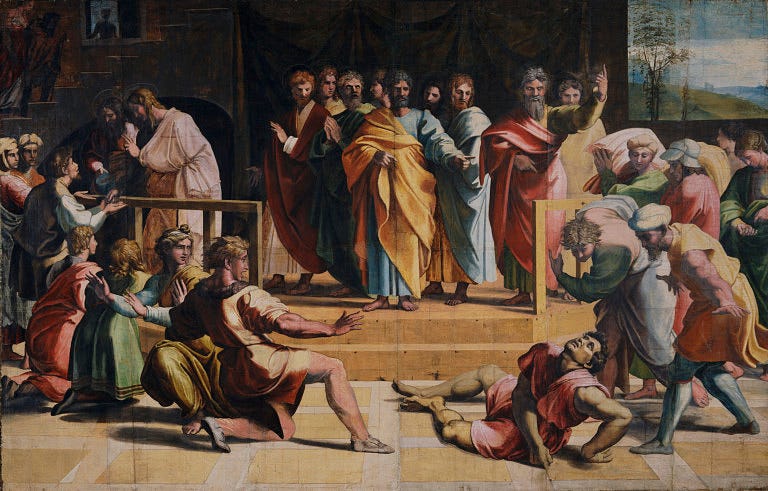
Remember, the crime of Ananias and Sapphira was that they lied to “the Holy Spirit,” and for this they died (Acts 5:3). Their crime was not owning land or even giving a portion of their money to St. Peter but lying to God that they had given all their money from the land proceeding when in fact they had not.
Contrast this to Marxism, where communal ownership was mandatory and people who did not conform were punished. Even the current president of China, Xi Jinping, was forced to work on a communal farm in his youth. In America, where a softer form of Marxism is pushed, it is still involuntary by nature. For example, consider a single-payer government-run healthcare system. In such a scenario, citizens do not have the option to voluntarily choose different plans but are forced to deal with a single-payer system.
3. It was temporary.
Only in the Book of Acts do we read of Christians sharing everything in common. The practice seems to have died out rather quickly. In fact, we do not read about it after Acts 5, where Ananias and Sapphira died. In other words, as soon as early Christians began practicing it, it ended. Contrast this to Marxism, where the communist revolution and the abolition of private property are the end goal of human history, the final utopia in which humans establish heaven on earth. Marxism has an alternate eschatology. Once again, in the United States, softer versions of socialism, such as a single-payer healthcare system, were not viewed as a temporary fix but as the genuine solution to our healthcare problems.
Having given three concrete reasons why the Book of Acts is not Marxist in its orientation, now finally consider the following. In Genesis, if one reads that book very carefully, Abraham always asks God for guidance before venturing off doing X, Y, or Z. Abraham always seeks God’s approval before acting. However, there is one time in which Abraham breaks this habit. In Genesis 16, not believing in God’s promise, Sarai tells Abram to take her slave Hagar and copulate with her in order to have a child. God did not instruct this, nor did Abram seek God’s permission first in complying with Sarai’s instruction. From this, what follows is trouble for Abraham as a rivalry begins between Sarah and Hagar and later Isaac and Ishmael.
Now consider this: nowhere in Acts is it written that God told the early Christians in Jerusalem to hold everything in common. They were full of the Holy Spirit, but if one reexamines Acts more carefully, the Spirit never explicitly instructed them to practice this. St. Peter and the early Christians did not ask God for permission first, and what we read is that trouble for the early Christians later ensued, as the deaths of Ananias and Sapphira exemplify. See the parallel between Acts and Genesis?
It is regrettable, surprising, and worrisome that the GMC commission thought it was fitting to remove Article XXIV. Given the rampant Marxism in the world today, the article is more relevant than ever! The justification given by the commission was that the article was more ethical than doctrinal, which is a false dichotomy, and should be moved to the “Social Witness” section of the Book of Doctrine and Discipline. However, such a move severely downplays the importance of the teaching, and more importantly than that, it removes it from the protection of the Restrictive Rule. This in turn makes its abolishment much easier. Why would a supposedly conservative iteration of Methodism do this? Technically speaking, if the GMC adopts these new proposed Articles of Faith, the Global Methodists will be more liberal on this point in their official doctrinal standards than the United Methodist Church when they first left it!
I have not even scratched the surface of the problems with the new proposal, nor have I even begun to fully defend the Twenty-Five Articles. Nevertheless, I hope this brief article will give GMC folks something to chew on.
Andrew V. Sullivan is a Ph.D. Candidate (ABD) in History at Liberty University and a layman in the Global Methodist Church. His dissertation paper is on the topic of Original Sin in the Theology of John Wesley and Jonathan Edwards.
Philip Schaff, The Creeds of Christendom, (Grand Rapids, MI: Baker Books, 1998) III:810.
The original proposal of the Articles of Faith can be read here, including the commentary from the Committee.
Documents of the Second Vatican Council, Sacrosanctum Concilium, www.vatican.va/archive/hist_councils/ii_vatican_council/documents/vat-ii_const_19631204_sacrosanctum-concilium_en.html. Accessed 2 June 2026.
Schaff, Creeds, III:813.

Finally someone with nuance!
My biggest things I would say is that I’m not a Christian Nationalist primarily because I’m not a nationalist, nationalism is like salt, a sprinkle brings out the dish, too much and you ruin it, especially in the US, but i understand completely what you mean and people just have different definitions and pious signaling
If GMC rejects the Articles of Religion are they still Methodist? I know what John Wesley, the Church of England minister, would say.