


As the Church journeys through the season of Lent, it is appropriate to reflect on the prayers we say liturgically, especially those of confession. These serve to guide us deeper into the season where we intentionally reorient ourselves to the excise of sin.
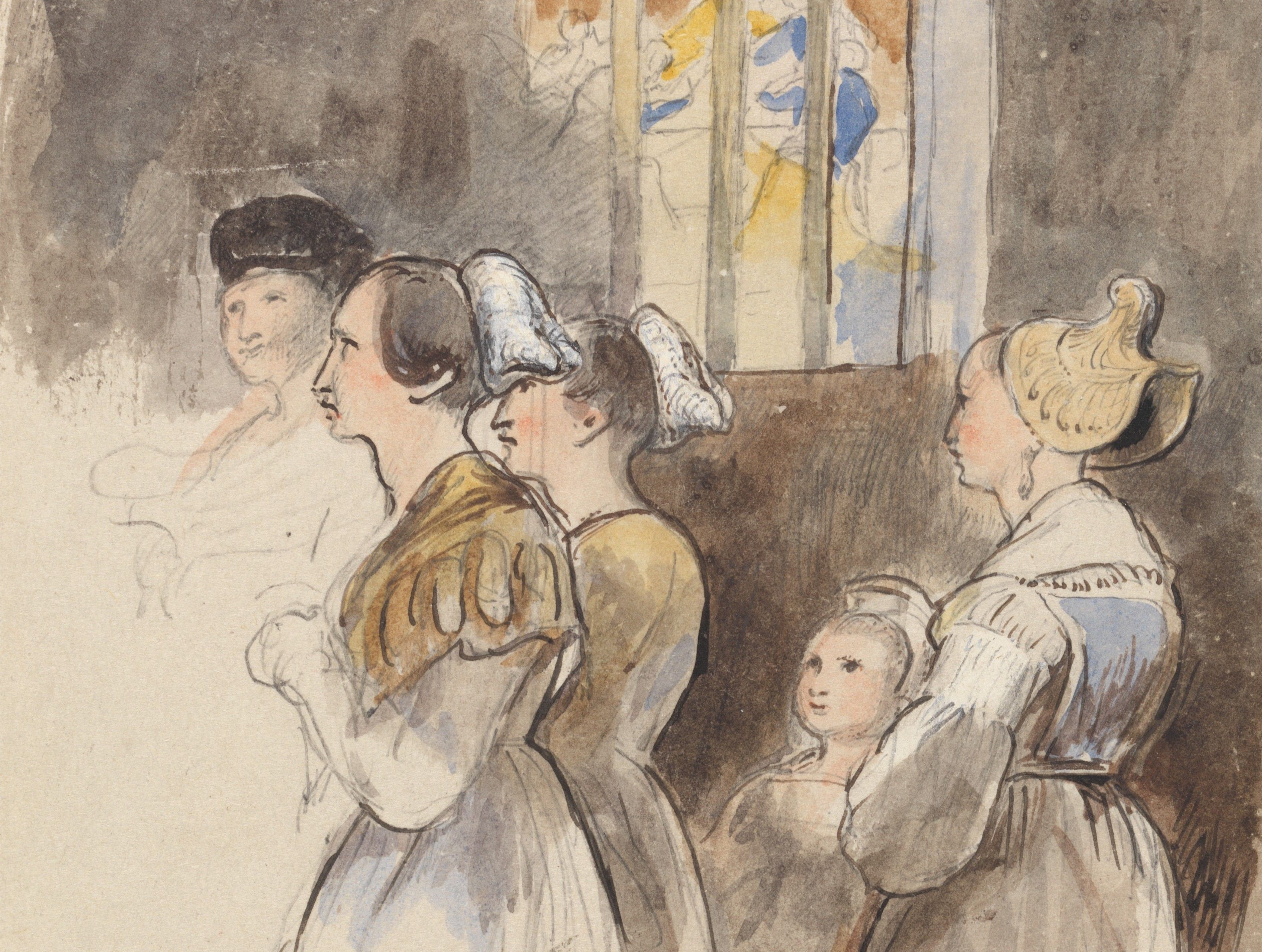
Prayer Book Confession
The Book of Common Prayer contains some of the most powerful and well-articulated prayers in the English language including several prayers of confession. Since its publication in 1549, the prayer book has undergone revisions from time-to-time based on the furthering of the English Reformation (1552-1662), local/national adaptation (America, Kenya, etc.), and changes in practice (Compline, expanded Pastoral Rites, explicit Epiclesis, etc.); yet generally to be a prayer book requires adhering to the principles, form, and shape found the Book of Common Prayer (BCP) published in 1662, the gold standard.
In America after Independence, the American church adapted the prayer book for its own local use. This is in keeping with the Reformation principle of the liturgy in the language of the people for the people of that place and time. This is most explicitly spelled out in Article XXXIV of the Articles of Religion.
However, many prayers and liturgies went rather unchanged. It was still the BCP, whether in England or America. One prayer that did not change through the years is the prayer of confession in the liturgy of the Lord’s Supper. It is appropriately the central confession of prayer book worship. This prayer will be examined in this essay for closer consideration. It reads:
ALMIGHTY God, Father of our Lord Jesus Christ, Maker of all things, Judge of all men; We acknowledge and bewail our manifold sins and wickedness, which we, from time to time, most grievously have committed, by thought, word, and deed, against thy Divine Majesty, provoking most justly thy wrath and indignation against us. We do earnestly repent, and are heartily sorry for these our misdoings; The remembrance of them is grievous unto us; The burden of them is intolerable. Have mercy upon us, have mercy upon us, most merciful Father; For thy Son our Lord Jesus Christ’s sake, forgive us all that is past; And grant that we may ever hereafter serve and please thee in newness of life, to the honour and glory of thy Name; Through Jesus Christ our Lord. Amen.
This is an incredibly beautiful and reverent prayer of repentance. It persisted alone until the liturgical revisionism of the 20th century, when alternatives were introduced in the Episcopal Church’s 1979 BCP. In the ACNA’s 2019 BCP, the prayer book my parish worships with and is the province’s norm for worship, the prayer regrettably only appears in an altered form in the Anglican Standard Text liturgy—one of two options. This altered form of the prayer, undoubtedly an attempt to faithfully modernize the prayer, unfortunately neuters the cadence of the prayer and removes some of the substantive language that helps us understand sin and repentance. The changes are noted side-by-side below in red.
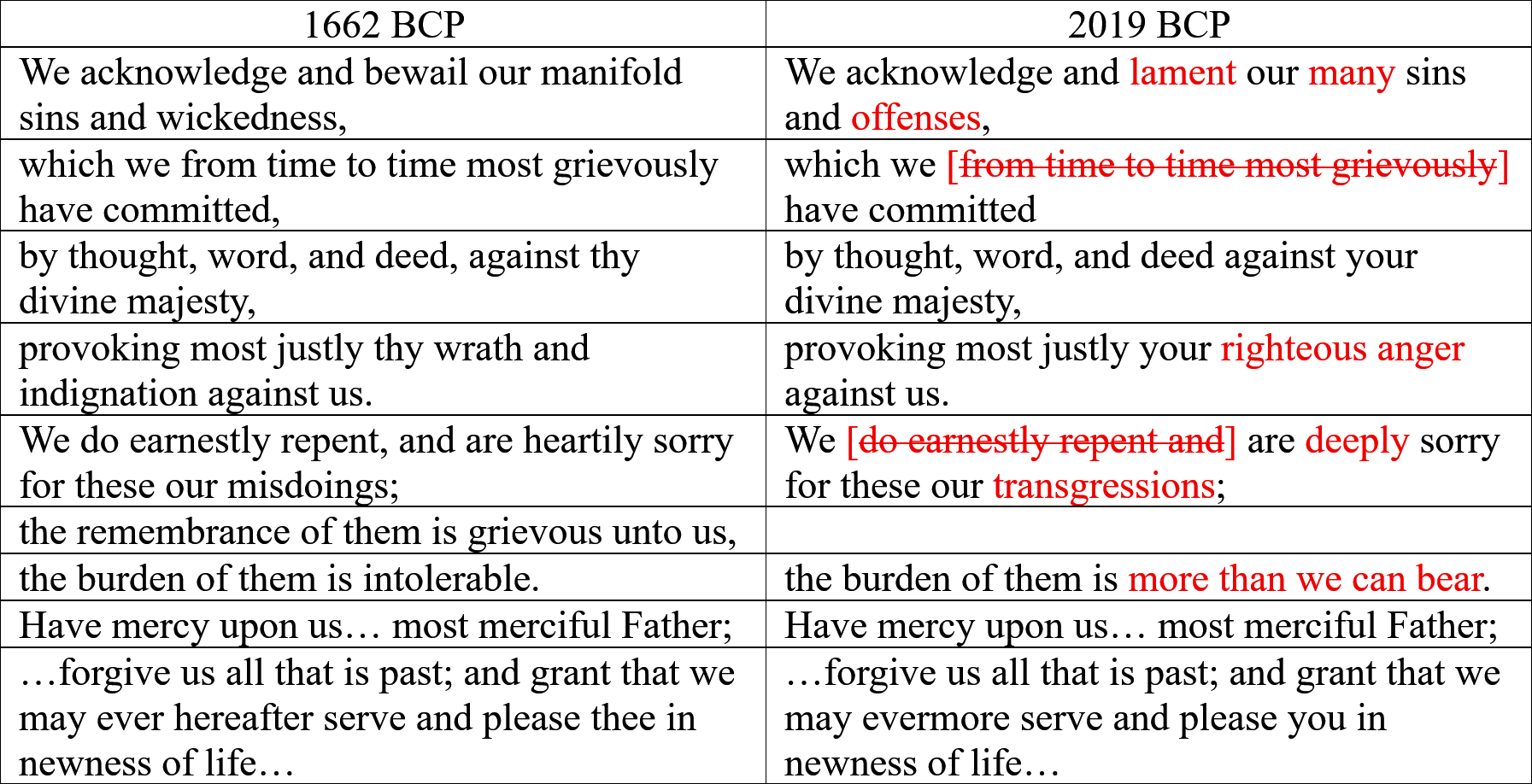
The Prayer of Confession
The traditional prayer works through pairs in a chiasm, as demonstrated in the graphic below. In this article, I will examine the traditional prayer as a mechanism that invites us into the Lenten season in repentance. I will also note the areas the 2019 BCP makes changes disrupting the intentional flow of the prayer as an invitation to the penitent life.
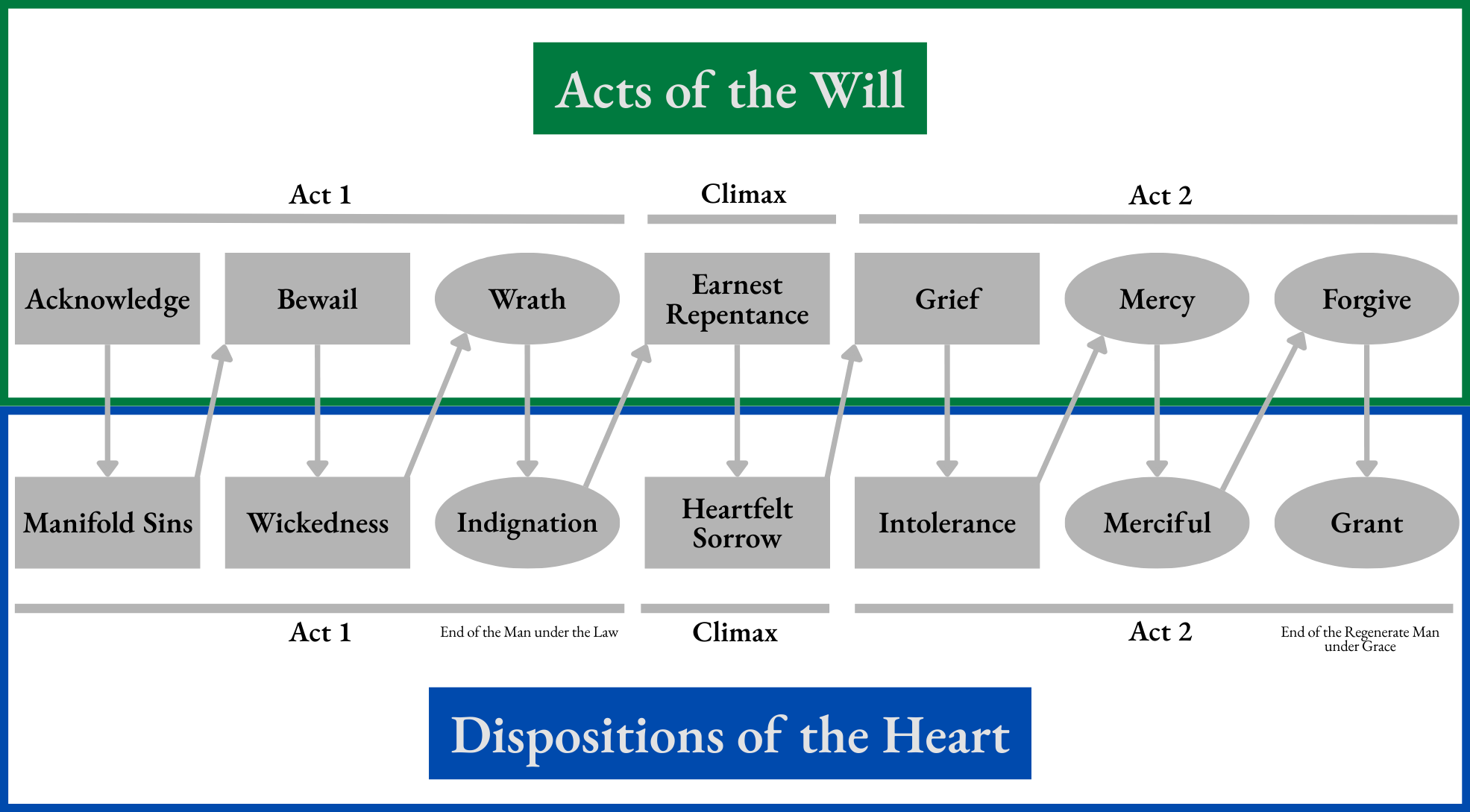
As demonstrated, each word cooperates with both the word it is parallel to and the word that follows to clarify for us how it is that we ought to understand sin and repent. The first word in each pair can be categorized as an act of the will. The second word in each pair can be called a disposition of the heart. On the chart, the squares are primarily about us, and the circles primarily about God. They are rooted in Scripture and emphasize the true doctrine of grace and salvation by faith. The prayer itself is a journey through the life of a Christian. Let us now examine the pairs.
Act 1
The first act of the prayer is a presentation of the law. We, having heard the preached Word in the sermon, the Exhortation, and throughout the liturgy, are confronted with the sickness of man: we are fallen to sin and death. We are directly confronted with the result of sin: God’s wrath. If the prayer were to only contain Act 1, it would rightly identify the end state of man under the law. St. Paul reminds us, “through the law comes knowledge of sin” (Rom 3:20), “all who rely on works of the law are under a curse” (Gal 3:10), and “the law brings wrath” (Rom 4:15) because, as St. James reminds us, “whoever keeps the whole law but fails in one point has become guilty of all of it” (Jas 2:10). And we are guilty. Act 1 guides us through recognition, contrition, and judgment under the law.
Acknowledge and Manifold Sins
How does one begin to acknowledge their sins? Faith. Katherine Parr, King Henry VIII’s last wife and a devout Protestant, described the faith that leads to acknowledging sin in this manner: “We shall never know our own misery and wretchedness but with the light of Christ crucified.” This contrasts Isaiah 59:11-12, where the people “growl like bears” and “moan and moan like doves,” looking for justice and salvation but unable to find it. Yet the Word illuminates that which is hidden. When “transgressions are multiplied before thee [God]” is when “our sins testify against us.” In the light of Christ, the Sinless One, sin is revealed.
Parr continues, “Then we shall see our own cruelty, when we feel his mercy; our own unrighteousness and iniquity, when we see his righteousness and holiness. Therefore, to learn to know truly our own sins is to study in the book of the crucifix [the Scriptures], by continual conversation in faith; and to have perfect and plentiful charity is to learn first by faith the charity that is in God towards us.”1 It is not only mere sins, properly speaking, that we see, but through them we begin to see the disposition of our sinfulness.
When we begin to see our sinfulness under the lens of the truth contained in Scripture, we see how vast it is—“the works of the flesh” become “evident” (Gal 5:19). The 2019 BCP is not wrong: our sins are many, somewhat echoing Isaiah 59:12. Yet, manifold captures some of God’s response to our many sins seen in verse 13 of that chapter, “transgressing, and denying the Lord, and turning away from following our God, speaking oppression and revolt, conceiving and uttering from the heart lying words.” For when we recognize the depth of our sin, we see its variety. We are not mere liars. Show me a law and I will show you a law-breaker. Our sin is manifold, multi-faceted, in a way that turns back justice, drives away righteousness, assaults truth, bend uprightness, and displeases God (Isaiah 59:14-15). We must recognize this vast manifold reality. It is not a matter of mere quantity of what we do in our wills, but the quality—dispositions—of our heart.
Bewail and Wickedness
Acknowledging something like manifold sins, however, requires and leads to more than mere knowing. More than mere acknowledgement, the correct response to sin is bewailment, a deep regret, connoting disappointment and even putting a bitter taste in one’s mouth. This is a mourning, the kind which St. Paul says will occur in his heart if he finds the Corinthians unrepentant of “uncleanness, fornication, and lewdness” (2 Cor 12:21 NKJV). Just as these sins St. Paul mentions are outward and vile sins, so our bewailment is that which recognizes the nastiness and begins to place in us a want of undoing it. This is not mere lament, wishing it were not so, but a discomfort budding in us—the kind of wailing that accompanies sackcloth and ashes.
But why are we so inclined to sin that we must learn to bewail in the first place? Because we are a fallen race. As virtue of being members of Adam’s race, “there is none who does good, not even one” (Psalm 53:3 RSV) Addressing the Corinthians in his first letter to them, St. Paul warns, “Do you not know that the unrighteous will not inherit the kingdom of God? Do not be deceived; neither the immoral, nor idolaters, nor adulterers, nor sexual perverts, nor thieves, nor the greedy, nor drunkards, nor revilers, nor robbers will inherit the kingdom of God. And such were some of you” (6:9-11a RSV).
The 2019 BCP totally misses the mark here, changing wickedness to offenses. The point of moving from manifold sin to wickedness in the progression of the prayer is not to merely restate our sinfulness in light of God’s glory, as does offenses, though it does at least that. Rather, in denoting the wickedness to which our natural birth entails us to, we press deeper into the issue at hand. This affirms the doctrine of original sin, bringing it to our attention, and the deep roots of our rebellion to the surface. As the Homilies state, our vainglory and pride must be pulled down on the way to humility.2 As will become apparent by the end of this essay, the 2019 BCP’s prayer misses the parallelism of acts of the will and dispositions of the heart working in tandem within the traditional prayer, often substituting the latter with more acts, or removing one side of the parallel all together.
Wrath and Indignation
Now we turn from confessions about who we are and what we’ve done to God’s response. It is rightly God’s wrath. The 2019 BCP’s change from wrath to righteous anger is again not false. But it does temper God’s anger somewhat, as though that were not apparent in His character from our assault against His “divine majesty.” Anger is also a step away from wrath lexically. Anger is primarily an emotion. Wrath can be spoken of as an emotion (wrathful), but more formally is an act. From God, wrath is justice delivered. God’s anger is flamed by abuse of His glory, and therefore those who abuse His glory rightfully are deserving of His wrath (Psalm 90:11). His deeds are just and even tempered, not merely emotive.
In Romans, St. Paul makes it clear this is what we deserve, this is the “righteous judgment of God” (Rom 2:5). If hardness and impenitence be the disposition of our hearts, sinful and wicked, we are deserving of this justice. Our manifold sin and wickedness speak of the true disposition of our hearts—we abuse God’s glory, hating Him and those made in His glorious image in our thoughts, words, and deeds.
Indignation is completely removed in the 2019 BCP, destroying the pair. This omission is pernicious as indignation speaks of the heart of God. He has contempt with our sinful selves, sins, and the state of the world. There is profound injustice against God and our fellow man, and we are perpetrators of it. God is not tolerant of this! Indignation indicates an aversion. It is not mere bitterness, as we have in our bewailment, but disgust. God hates our sin and injustice far more than we do. God will not settle for anything less than perfect justice, perfect peace, perfect love, and His glory revered. Recognizing the true depths of our condition requires looking even beyond our sin to the heart of God, where we recognize we will not escape God’s judgment (Rom 2:1-3).
For the man under the law who does not proceed past this point to repentance and grace, this is the end. In this way, the prayer is a warning, and a preaching of the Gospel. To stay under the law is to rightly suffer God’s wrath and indignation. John Calvin compares the law to a mirror, saying, “In it we contemplate our weakness, then the iniquity arising from this, and finally the curse coming from both—just as a mirror shows us the spots on our face.”3 In the narrative journey of the prayer, we have reached a crossroads; knowing the spots present demand action or inaction.
Climax
St. Augustine apprises the situation as such: “If the Spirit of grace is absent, the law is present only to accuse and kill us.”4 Will the potential penitent remain under the law, under God’s wrath and indignation, or proceed into His mercy and grace by the power of the Holy Spirit? The climax of the prayer is the great pivot, moving us from under the law to the Gospel. But how does man get there? The prayer explains it is by repentance beyond words, inviting us to this great act.
Earnest Repentance and Heartfelt Sorrow
What, then, can we possibly do, knowing of God’s indignation? The disposition of our hearts must change. Flowing from the contriteness of our bewailment, recognizing we are deserving of God’s wrath, we must earnestly repent as a deliberate act. If, as St. Paul said, impenitence is the disposition of those who under God’s righteous judgment, we must be penitent. Repentance is not a mere asking for forgiveness, but a turning of the heart, the will, and the mind toward God when it is was not directed to Him. Our response to our state is not merely to do good, restrain from evil, or feel worthless, but to throw ourselves at the mercy of God, recognizing our great need for Him in light of our deep rebellion. Knowing we have not the strength to save ourselves under the Law, we turn to God.
But if we are to be penitent, and earnest in our repentance, what is the condition of the heart? What is the faith of this man? Heartfelt sorrow underlines the disposition of the heart that accompanies earnest repentance. Parents will understand this well. We endeavor to teach our young children to apologize when they do wrong. In the beginning, we teach them when to merely say “I’m sorry” to us, and they learn to oblige. But every parent recognizes the first time their young child is truly sorry. The sorrow that accompanies that true “I’m sorry” is tangible. There is a sense of remorse, pain even, in that true confession. It is heartfelt because we can often physically feel this sorrow in our hearts. This is likely because contrition flows straight from the heart of God to us (Isa 66:2). We must feel this true sorrow about our sins, as it separates the type of repentance which is heartfelt from that which is transactional.
Unfortunately, the 2019 BCP removes the mention of earnest repentance in favor of combining the two statements by saying “deeply sorry.” Yet again, this disrupts the chiasm and is lexically castrating.
Act 2
“But the believers, saith Paul, have another schoolmaster in their conscience: not Moses, but Christ, which hath abolished the law and sin, hath overcome the wrath of God, and destroyed death.”
- Martin Luther, Commentary on Galatians
As Act 1 served to remind us of the law, Act 2 gives us the antidote, the Gospel. As we receive the antidote, our heart changes still. God, not content to leave us as redeemed sinners who continue to sin and live hopeless lives, invites is to become more like Him—to be sanctified, to be holy. The second act of the prayer teaches us what that change is like and invites us into the change.
Grief and Intolerance
Amidst the pain of sorrow comes another feature—grief. In Psalm 51, David considers the great blight of those who are far from the Lord in asking the Lord to restore him. He prays to be delivered from having an unclean heart and having a spirit that is unsteady. The fruit of his state is being cast away from the Lord’s presence and the Holy Spirit departing from him (Psalm 51:11-12). The grief that accompanies this is profound. Like David, when confronted with our sin, often our first reaction is anger (2 Samuel 12:5), but this is because of the misalignment of our own hearts, wherein we often selfishly seek to protect our sin and conceal it. Instead, we ought to pray to grieve our sin, in a way that we understand the deadly consequences and effects of it on ourselves, others, and how it separates us from God. In clarifying the danger for us, the Book of Homilies remind us, these prayers ought to “move and stir us to cry upon God with all our heart, that we may not be brought into that state [of separation from God]; which doubtless is so sorrowful, so miserable, and so dreadful, as no tongue can sufficiently express or any heart can think.”5

In our grieving our sin, we begin to understand why it must not be tolerated. In learning intolerance of sin, we are invited to become like God. Holy. Sanctified. Without sin. That is our goal and why we repent, to be free to perfectly love God and worthily magnify His holy name. In the use of intolerance as the conclusion of our response in this prayer, we see the genius of Cranmer and the English Reformation at work. Intolerance of sin sounds drastic. It is. It is our goal. “For what partnership have righteousness and iniquity? Or what fellowship has light with darkness?” (2 Cor 6:14 RSV).
John Wesley, echoing Homily IV, challenged his hearers toward this end in a sermon, saying, “Why should any man of reason and religion be either afraid of, or averse to, salvation from all sin? Is not sin the greatest evil on this side hell? And if so, does it not naturally follow that an entire deliverance from it is one of the greatest blessings on this side heaven? How earnestly then should it be prayed for by all the children of God! By sin I mean a voluntary transgression of a known law. Are you averse to being delivered from this? Are you afraid of such a deliverance? Do you then love sin, that you are so unwilling to part with it? Surely no. You do not love either the devil or his works. You rather wish to be totally delivered from them, to have sin rooted out both of your life and your heart.”6
Therefore, the next time you confess your sins, whether extemporaneously, to your brothers, in the presence of your minister, in the Daily Offices, or before coming to the Lord’s Supper, do devoutly pray with intolerance of sin in mind. Endeavour for that to be the desire of our hearts and content of our being. This is God’s heart for us, that we should love Him more than sin. Sin must be disgusting and intolerant to us too if we are to be made like God in Christ, our will and desires must be reordered by repentance until that is so.
In the 2019 BCP’s revision, the line “the remembrance of them is grievous unto us” is removed (as well as the earlier mention of grievous in the second line of the prayer) and intolerable is changed to “more than we can bear.” This not only removes the pairs working together again, but also makes it about us, our inability to handle our sin. While it is true that without God’s grace, we alone cannot bear the weight sin, this fundamentally alters the meaning of the prayer. God, in His patient mercy, bears with us though we sin, yet He does not tolerate it. We are to become like Him in our intolerance of sin, not stuck in a perpetual state of miserable inability to bear sin. Notice that intolerance is on the heart’s disposition side of the prayer. It does not concern quantity—weight; rather it concerns quality—the heart. “More than we can bear” creates yet another category error in the flow of the prayer.
Mercy and Merciful
Now, in the structure of the prayer, we move to God’s response. Firstly, we pray for God’s mercy. As people who have appropriately humbled ourselves, as David demonstrated in Psalm 51, then we make our appeal to a God who is so merciful that He does not despise a broken and contrite heart. First, we ask God to have mercy to relent from His wrath, though deserved it may be. Scripture teaches up that God gives of His mercy freely, it is abundant, available, and new every morning. It is because of the availability of it, a free gift, that we are able to appeal to His mercy. We must appeal to His mercy, because no good works, adherence to the Law, being restrained from further evil, or other thing we can do ourselves can possibly deliver us from the wickedness we grieve and are seeking to be intolerant of. Mercy is the first of three things the Homilies tell us to obtain in pursuit of righteousness, and it is from the act of God’s mercy that we see His mercifulness.7
This aspect of the prayer is just as much an affirmation of who God is as wrath and indignation. In this way, the prayer demonstrates another attribute of God we are to imitate. In the Beatitudes, Christ commands, “Blessed are the merciful, for they shall receive mercy.” (Matt 5:7 ESV). Uniquely, our reception of mercy is directly linked to one’s mercifulness. God, being one with infinite mercy, is infinitely merciful. This is only to our benefit that the One who is perfectly just is only infinitely merciful, for we know that no one else is capable of such steadfast and faithful love. If God grants us true mercy, it is true mercy.
Forgive and Grant
The second article Homily III states we must obtain for righteousness is Christ’s justice. By appealing to God for forgiveness “for thy Son our Lord Jesus Christ’s sake,” we are asking God to give us Christ’s righteousness, which comes only by Christ’s death and merit through God’s mercy, and embraced by faith. This is the righteousness spoken of by St. Peter in his first epistle: “He himself bore our sins in his body on the tree, that we might die to sin and live to righteousness. By his wounds you have been healed” (2:24 RSV).
He will be a loving Father unto us, correcting us for our sin, but not withdrawing his mercy finally from us, if we trust in him, and commit ourselves wholly unto him, hang only upon him, and call upon him, ready to obey and serve him. This is the true, lively, and unfeigned Christian faith, and is not in the mouth and outward profession only, but it liveth, and stirreth inwardly in the heart.8
What the prayer invites us to ask of God is no small thing. We are asking for “newness of life,” such a life that allows us to serve God rightly and be pleasing to Him. This echoes the great regeneration statement in Romans 6:4, “We were buried therefore with him by baptism into death, so that as Christ was raised from the dead by the glory of the Father, we too might walk in newness of life.” (RSV). As a penitent praying this petition, we appeal to the ongoing mercy of God which is “new every morning” (Lam 3:23).
The third article Homily III mentions is a true and lively faith. Living a life wherein we serve God and do what is pleasing to Him is a life where the fruit matches the tree (Article XII). Good works, the outgrowth of justification, finally makes an appearance, and it is central to our ongoing repentance and faith in Christ in the pattern given to us by this prayer. Living a life displaying by good works is not secondary, it is natural, inherent, for the Christian. As Martin Luther famously remarked, “Now, when I have thus apprehended Christ by faith, and through him am dead to the law, justified from sin, delivered from death, the devil and hell, then I do good works, I love God, I give thanks to him, I exercise charity towards my neighbour.”9 Further, what separates someone with true, lively, and unfeigned faith from someone who is falling from faith is continuing to walk in newness of life and being continually repentant, even if one does sin (1 Jn 2:1).
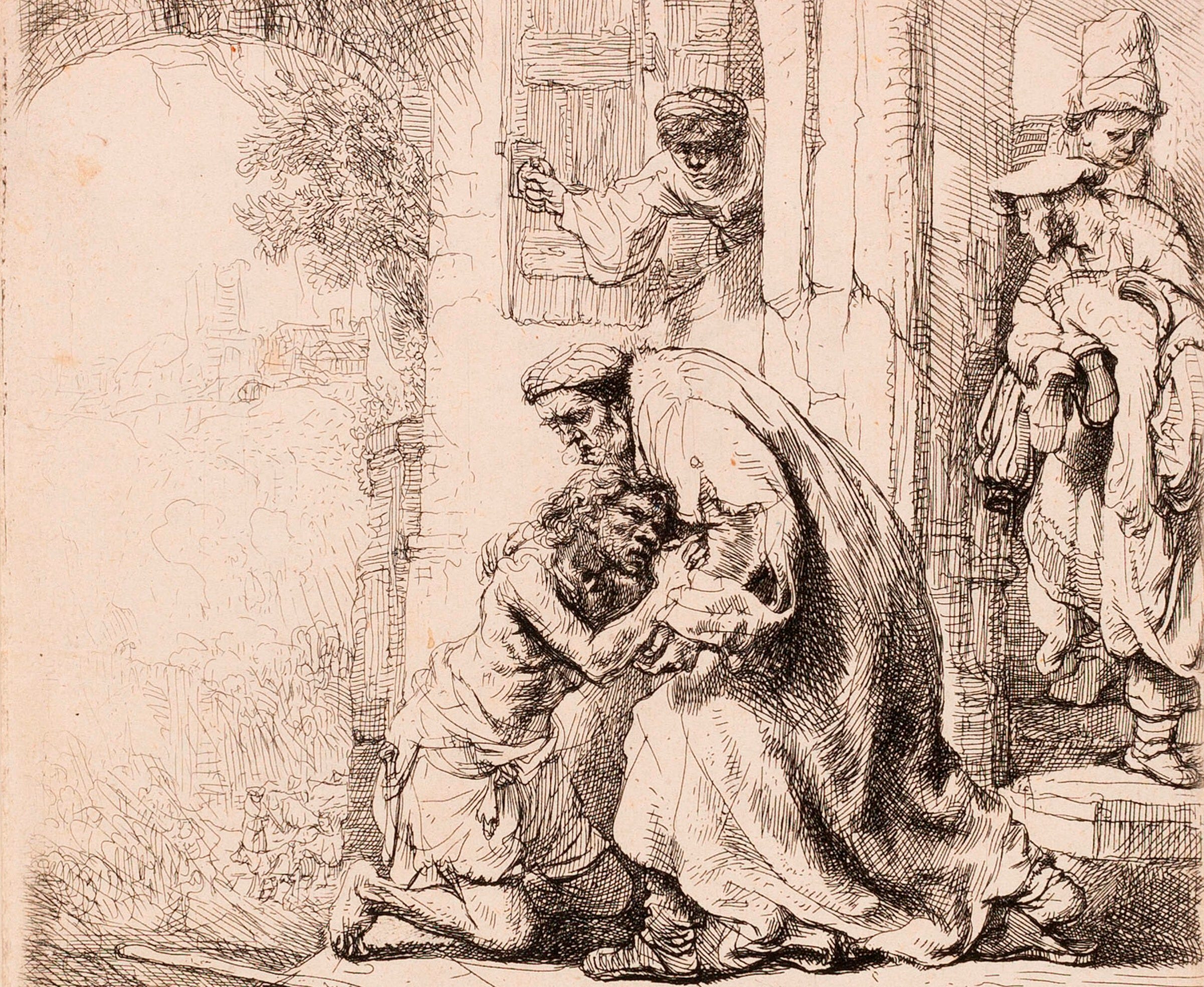
Notice the pattern; in Act 1 of the prayer, we, man, had two moves: acknowledge/sins and bewail/wickedness while God has one, wrath/indignation. Now, in the second act we have one move: grief/intolerance. God has a two-fold response: mercy/merciful and forgive/grant. In our sin, we were the focus. In our newness of life, God is the focus. He does this to us of His great mercy.
Conclusion
While this essay is in a sense literary criticism, my larger hope is that it invites you to see the prayer of repentance we confess approaching the Lord’s Table each Sunday in its fullness. The prayer was intentionally crafted. It is a narrative about man’s redemption from sin to newness of life. It is poetry. It invites us deeper into the life of God in Christ as penitents and holy people.
It is unfortunate the 2019 BCP modified it in such a way as to harm and even remove many of the unique qualities of the prayer (however, I am thankful the original prayer is completely restored in the 2019 BCP Traditional Language Edition). I hope that by working through the prayer line by line, you become more aware of the great qualities possessed by prayers found in the BCP such as this one. They teach us the faith. This prayer in particular is designed to remind us, every Sunday, about the journey of salvation. If we are not careful these prayers, which have such depth, can become rote—mere things we say repetitively without considering what we are saying. Therefore, I invite you to consider the things you are saying. Take them up. Ruminate on them and allow them to point you to the Gospel and change your inward parts.
Katherine Parr, Lamentations of a Sinner, ed. Ollie Lansdowne, New Whitchurch Press, 119-120. https://newwhitchurch.press/parr/lamentation
“A Sermon of the Misery of all Mankind and of His Condemnation to Death Everlasting by His Own Sin” (Homily II), in The Books of Homilies: A Critical Edition, Gerald Bray, ed., James Clarke & Co, 14.
John Calvin, Institutes of the Christian Religion, ed. John T. McNeill, trans. Ford Lewis Battles, Vol. 1, Westminster John Knox Press, 355 (II, VII, 7).
Augustine, On Rebuke and Grace I.2, as quoted in Calvin, Institutes, 356 (II, VII, 7).
“A Sermon, How Dangerous a Thing it is to Fall from God” (Homily VIII), Homilies, 71.
“On Perfection” (Sermon 76), The Sermons of John Wesley, ed. David Giles, Wesley Center for Applied Theology at Northwest Nazarene University. https://wesley.nnu.edu/john-wesley/the-sermons-of-john-wesley-1872-edition/sermon-76-on-perfection/
“A Sermon of the Salvation of Mankind by Only Christ our Saviour from Sin and Death Everlasting” (Homily III), Homilies, 24.
“A Short Declaration of the True, Lively, and Christian Faith” (Homily IV), Homilies, 32.
Martin Luther, Commentary on Galatains, Logos Research Systems, 163.
Thanks Sidney. As a recent convert to Anglicanism, I confess that I have missed the beauty of the 1662 Prayer of Confession. While I understand the desire to contemporize our language, I feel we are depriving the generations the enduring quality of the original language. Even today, 60 years later, I can quote the original language from the Methodist Hymnal, which was very close to the 1669 BCP. The only difference is that the MH omits the phrase, "The burden of them is intolerable." Thanks and keep writing.